Friday, October 19, 2018

Why Everyone Should Read the "Nationalist Stuff"

If you read The Art of the Deal, you
should also read this.

Recently, a prominent China scholar said during a podcast that he never read the two collected volumes of Xi Jinping's speeches.  He found the speeches too repetitive and meaningless to read.  While I agree with his characterization of the speeches, I think his decision not to read them shows a frightening sense of arrogance.  Even today, prominent players in the China watching community continue to ignore important works of Chinese propaganda.  As a result, they miss out on important insight into the regime including its goals and core values.  For example, Xi Jinping's speeches contain numerous speeches referencing the Chinese race.  Yet, few China scholars reference Beijing's efforts to create a united block of politically involved citizens throughout the overseas Chinese community.  

In the book Tiger Trap, a CIA translator tells a field agent that they don't bother to translate the "nationalist stuff".  I found this statement incredibly frightening.  Considering the amount of nationalist stories printed by the Chinese state media, the CIA must not bother translating 90% of state media.  The events chronicled  book took place in the 1990's.  I sincerely hope the CIA has changed this terrible policy.    

Chinese state media plays a fundamental role in the Chinese Communist Party's efforts to shape public opinion both inside and outside of China.  Mostly, the media parrots the office party line.  Regardless of the position taken by Chinese state media, the content of 
What it produces offers indispensable information for formulating the US's China policy.  Chinese citizens receive a steady diet of patriotic propaganda, and its ubiquity shapes the unconscious opinions of the average Chinese citizen.  The idea that America's spy agency didn't bother to translate and catalog nationalist statements in the Chinese press shows a massive amount of hubris.   

Many of Xi's speeches contained important foreshadowing of China's recent policy shifts.  For example, his speech in 2013 that called China a "maritime" power.  Chinese propaganda helps telegraph the goals and the perceived threats to China's communist regime.  Only a fool would fail to read and study the words of his adversary.       

Sunday, August 26, 2018

Trade Wars and Technology Transfers

China's rise as tech powerhouse shouldn't surprise anyone.  The Chinese Communist Party actively encourages technology transfers between foreign companies and their Chinese partners.  Most foreign companies operating in China must form a joint venture with a Chinese company.  This forced transfer of intellectual property underpinned China's rise as a technology and manufacturing powerhouse.  Now, China plans to unleash its national champions onto the global marketplace.  The real questions is, how can American and foreign companies compete? 

Several things facilitated China's rapid development.  First, China encouraged foreign companies to manufacture in the country.  These foreign companies brought money, capital, and knowledge.  Second, China's large population and cheap labor made it attractive to the foreign companies.  Finally, Chinese employees and joint ventures acquired knowledge and skills from their foreign employers and foreign partners.  Many of these former employees and current/former partners built competing companies.  Effectively, foreign companies often indirectly created their future Chinese competitors. 

Today, foreign companies face an unfavorable regulatory environment in China and increased competition from Chinese companies in foreign markets.  In many industries, foreign companies cannot hope to remain competitive in the Chinese market for very much longer.  The CCP continues to squeeze foreign companies operating in China with a lethal combination of regulations and nationalism.  General Secretary Xi routine calls on his countrymen to close the technology gap between China and the Untied States and lessen China's dependence on foreign technology.  Simultaneously, he pushes for collaboration between China's technology companies and the Chinese military.

It's pathetic it took the United States this long to wake up.  The trade war has thrown China off balance, but the United States shouldn't hesitate to go for the jugular.  Paying a few extra cents for the stuff you buy at Walmart is a small price to pay for securing America's technological and strategic advantages.       

Sunday, February 25, 2018

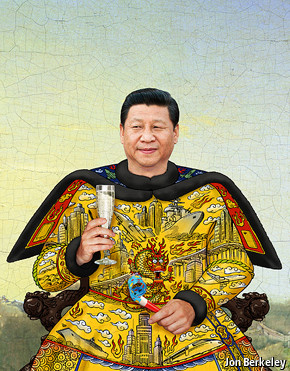
Crowning an Emperor: China Abolishes Term Limits for Xi Jinping

Image result for emperor xi jinping
Emperor Xi courtesy of the
Economist
Today (2/25/2018), news broke that China would abolish term limits for the "President" and "Vice-President" of the nation.  The amendment to China's Constitution will remove a clause that limits the terms of the President and Vice-President to two consecutive terms.  This is huge news for two reasons.  First, the change effectively makes it easier for Xi Jinping to remain in power past 2023.  Something already expected to happen.  Second, it marks a titanic shift in policy for the communist party and the nation.  Term limits for Chinese leaders became the norm after the death of Mao Zedong in 1976.  Now, China has jumped into the abyss by muddying the waters of its already murky leadership succession process.       

For a regime that prizes stability uber alles, allowing a 64-year-old man to rule until his death doesn't sound like a good policy decision.  Famously, the Chinese Communist Party has an obsession with the collapse of the Soviet Union.  Many argue that the instability caused by the Soviet Union's rapid succession of leaders in the early and mid-1980's caused the collapse of the country.  It is possible that the term limits in China sought to prevent similar issues to those caused by the cascading deaths of Brezhnev, Andropov, and Chernenko.  Like many in the former Soviet Union, the Chinese leadership has an abysmal opinion of the Soviet Union's final leader Mikhail Gorbachev.  In a famous quote attributed to Xi Jinping, Xi said that the Soviet Union collapsed because no one was man enough to stand up and defend it.  Ironically, China’s constitutional change risks placing the country in a similar situation to the Soviet Union in the early 1980’s. 
         
Thus far, the earth-shattering news hasn't received much attention in China.  Even the foreign language divisions of China's state-owned news outlets haven't directly addressed the news.  Xinhua buried the lead deep on a page of pending constitutional amendments (see link below).  However, many Hong Kong news outlets, such as the South China Morning Post, ran the news on the front page of their websites.  Regardless of how little ink the constitutional change receives in China, it will fundamental alter the trajectory of China and the world.   

http://www.xinhuanet.com/english/2018-02/25/c_136999410.htm


Wednesday, January 31, 2018

The Grey Market for Foreign Products in China

Foreign baby formula 
is worth its weight 
in gold in China!
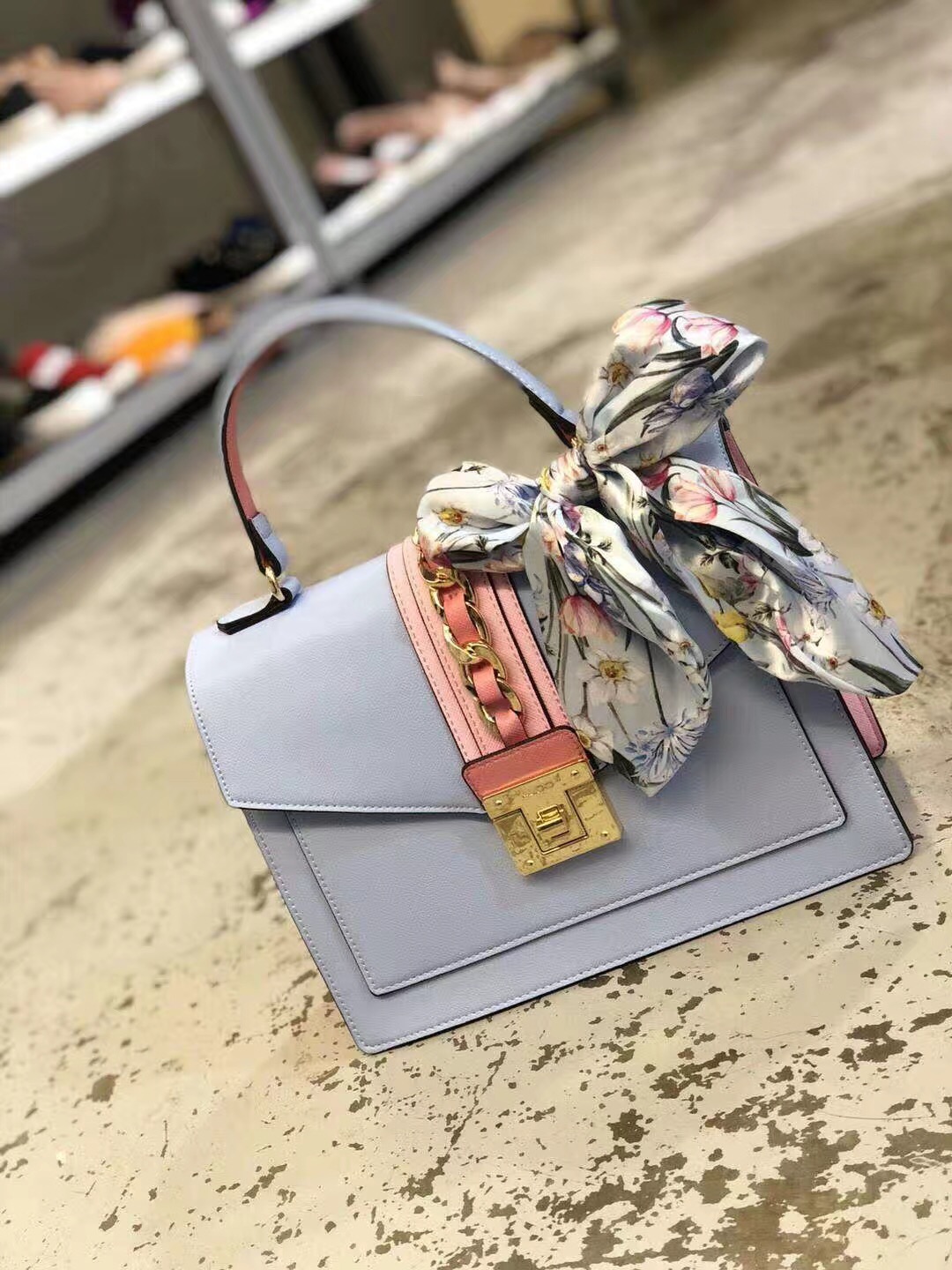
Daigou's are overseas Chinese who either work, travel, or study in a foreign country and sell items purchased abroad for resale in China.  They take advantage of price differences between the products sold in China and the same products sold in the rest of the world.  Recently, daigou's have received a great deal of attention in the press.  News outlets continually chronical high-profile shortages of baby formula in Australia, Hong Kong, and elsewhere caused by Chinese middlemen buying the product in bulk for resale in China.  Several factors contribute for the demand for foreign products in China.  First, Chinese consumers do not trust domestic brands because of a series of deadly safety scares.  Second, Chinese consumers often prefer foreign brands because of their status and higher quality.  
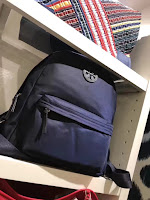
Designer bags are very
popular
Chinese consumers who purchase foreign products in China must pay high and clandestine taxes.  These taxes dramatically increase the prices of popular consumer products in China.  In many cases, the government levies these high taxes on foreign brands made in China.  Milk powder, luxury bags, vitamin supplements, and electronics are popular items sold by daigou’s.  In November of 2017, the Chinese government cut the average import tax from 17.3% to 7.7%.  However, the incredibly opaque method of how, when, and at what rate the government levies import taxes makes this claim suspect.   
Chinese consumers circumvent the high taxes by buying products through daigou's.  They buy products while abroad and ship the products back to China for sale at a markup.  Despite the costs and time involved in this practice, it is still cheaper for Chinese consumers to buy products through daigou's than from retail outlets in China.  The fact that many of the products purchased abroad and sold by daigou's in China have "made in China" stamped on the back of them makes this practice incredibly surreal.  For example, something is:

1.  Made at a factory in China
2.  Shipped to a port    
3.  Loaded on a ship and shipped across the Pacific Ocean
4.  Unloaded at a port in America
5.  Loaded onto a truck and shipped across the country
6.  Unloaded and put on display in a store
7.  Purchased by a daigou (after they receive an order from a consumer back in China)
8.  Purchased, packaged, and shipped by the daigou
9.  Sent to a sorting facility
10.  Shipped to a port 
11.  Loaded onto a ship 
12.  Sent across the Pacific Ocean
13.  Unloaded at a port in China
14.  Shipped by truck to a sorting facility
15.  Delivered by a delivery service to the Chinese consumer in China

And the item still costs less than if the Chinese consumer bought it off the shelf at their local store!
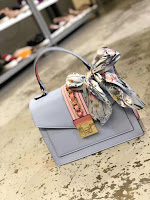
Items like this a 
listed on
WeChat accounts
Daigou's use the Chinese social media platform WeChat to list products available for purchase in stores.  Daigou’s take pictures of the items and upload them as a “WeChat Moment,” which is similar to a Facebook “Status Update.”  Go to a Costco or Wal-Mart in any major city, and you will likely find Chinese people taking pictures of products with their phone.  They work as daigou’s.  People in the daigou's social circle can view the products and place orders by forwarding a message to the diagou using the app.  Often, purchasers pay for the items through Alipay or some other form of virtual wallet (think Apple Pay but Alibaba branded).  

Some daigou's have the ability to carry the items they've sold through customs.  You'll see hundreds of daigou's at the Shenzhen and Hong Kong border.  Follow the link to see a YouTube video about the border.  Whenever I arrive at Beijing Capital Airport, I rarely see anyone go through the line to declare items at customs.  Even individual travelers with five or six suitcases go through the "nothing to declare" line without a problem.  It's painfully obvious that these people are daigou's returning to China with items purchased abroad.  
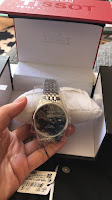
This watch likely
comes with at least
a 50% markup in
China

So why don't customs officials stop them and make them pay taxes on the suitcases full of items they've purchased for resale?  There's a lot of speculation about why the Chinese government turns a blind eye to daigou's.  I think it's because it allows overseas Chinese to generate wealth without having them interact with us "natives."  Feel free to speculate in the comments below....

https://www.youtube.com/watch?v=YQm5FZMforg

http://www.scmp.com/news/china/policies-politics/article/2121377/china-cuts-import-tariffs-range-consumer-goods

http://www.nzherald.co.nz/business/news/article.cfm?c_id=3&objectid=11979837


Thursday, November 2, 2017

Xi's All That

The Chinese Communist Party just wrapped its 19th Party Congress.  Twice each decade, China's rubber stamp parliament meets to sing its own praises.  Unsurprisingly, cadres read out of new hymnals provided by Xi Jinping.  It should surprise no one that Xi further consolidated his power at this event.  Here are a few interesting and/or important takeaways from the event.       

XI IS ON TOP
A new politburo standing committee (PSG) was named.  However, it didn't include a clear successor for Xi Jinping.  I've seen many click-bait articles speculating that this is the first important signal that Xi Jinping plans to hold the reigns of power past his expected retirement date.  Without a doubt, this was the biggest news from the event.  The regime famously fears government instability caused by top officials suddenly passing away (a la the Soviet Union in the early to mid-eighties).  Xi staying in power past 2022 would show a major shift in the party's priorities.             
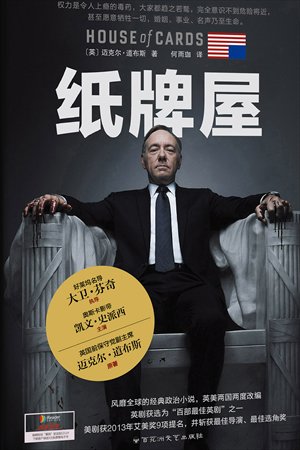
Related image
House of Cards...China
Style 

WANG IS OUT
Many expected that China's anti-corruption tsar, Wang Qishan, might break with tradition and stay on the PSG despite reaching the customary retirement age.  This didn't happen.  Seen as a fiercely strong ally of Xi, Wang had the added benefit of not having children.  Too bad Wang's favorite TV show, House of Cards, probably won't release a new season anytime soon.

LONG SPEECHES AND CONSTITUTIONAL CHANGES
Xi gave a  3 hour and 24 minute speech.  The communist party wrote Xi Jinping thought into the Chinese Communist Party's Constitution.  Past leaders have had their political philosophies enshrined in the party's constitution.  However, unlike Deng, Hu, and Jiang, Xi's political philosophy had his name attached during his lifetime.      

Image result for jiang zemin magnifying glass
It's the fine print that'll get ya...
JIANG STEALS THE SHOW
Xi Jinping might have given the keynote speech, but China's former leader Jiang Zemin stole the show.  Images of Jiang yawning during Xi's public speaking marathon lit Chinese social media on fire.  Like a student on the last day of school, Jiang incessantly checked his watch.  The 91 year-old used his now iconic magnifying glass to great effect during Xi's speech.  Expect this make and model of magnifying glass to rocket up the sales charts this Singles Day (11/11).  I have already purchased mine on Taobao.     

Friday, October 27, 2017

Trainspotting 2: Beijing Railway Station

Beijing Railway Station is an underrated architectural gem.  Situated just inside the city's second ring road, Beijing Railway Station stands out from the city's other railway stations because of its Soviet and Chinese influences.  It's hard to miss this majestic building, but few tourists get the chance to see it.  The station building resembles a hypothetical child of the Forbidden City and Grand Central Station.  Built to commemorate 10 years of communist rule in China, the station has welcomed countless visitors to the city during its nearly 60 years.          
Crowds congregate in front of the station 
Photo from China Daily 
                            
In a nation known for gigantic structures, this station still manages to impress.  It has the grand size of Union Station in Chicago, but with way more people.  The sea of humans in the square directly in front of the station never dissipates.  It doesn't even have a discernible ebb and flow.  Despite the sea of people coming in and out of the station everyday, the station doesn't feel nearly as cramp as some of Asia's other famous train stations.  Unlike other large stations in Asia, Beijing Railway Station doesn't have short ceilings or a utilitarian vibe.  Instead, the communists built a station that ironically evokes grandeur and distinctiveness.       
The station lit up at night 
Photo from Beijing-Travels

Like Amsterdam Central Station, Beijing Railway Station features twin clock towers.  The clock towers are certainly my favorite part of the building.  Another distinctively Chinese thing about the station is its relatively isolated position.  Large public buildings in China are often set-apart from nearby buildings to emphasize their size and importance.  Exiting the station and going to the KFC across the street takes a five minute hike.  You must walk across the enormous public square directly in front of the station and then travel up and down an elevated walkway over a busy city street.  This is one hell of a hike for one of the world's most densely populated cities.  
An original clock face
in China's Railway Museum 
The station's platforms 
Some large stations in Asia literally have shopping malls or skyscrapers built on top of them.  To the untrained eye, these stations simply look like other nondescript buildings in their respective cities.  Efficiency and convenience were the driving motivators behind their design.  In contrast, the designers of Beijing Railway Station didn't take these factors into account when building this monument to communist rule.  Beijing Railway station wants you to know it's a train station, it wants you to know its important, and it wants you to know its here to stay.      


Monday, September 18, 2017

Quotations from Chairman Lee

Image result for lee kuan yew
A photo of Lee Kuan Yew
Lee Kuan Yew served as the first Prime Minister of Singapore.  He held the post for decades and guided the city-state through its rocky beginnings to becoming an "Asian Tiger."  Throughout his life, Lee Kuan Yew succeeded in taking Singapore from a weak former colony to an economic powerhouse.  He often courted controversy for his authoritarian disposition and his tendency to be "politically incorrect."  Several of his more famous and interesting statements have been collected in the book Lee Kuan Yew: The Grand Master's Insights on China, the United States, and the World.  

The book collects Lee Kuan Yew's statements  on topics ranging from the rise of China to Islamic extremism.  Lee's most interesting statements have to do with culture and the role it plays in the success of society.  He makes numerous statements applauding the United States's entrepreneurial culture and China's emphasis on saving.  For me, his realistic emphasis on culture and the role it plays in economic success and political stability run counter to the conventions of Western politicians.  The ethnically Chinese leader of a former British colony didn't have to worry about the international community branding him racist or imperialistic (though some still did).    

Lee didn't shy away from the fact that certain cultural attributes contribute to a nation's success.  Lee reshaped his nation after it gained independence by changing it to compete on a global scale.  His administration emphasized education and sacrifice.  It took only a few decades under Lee's guidance to raise the tiny, island nation of Singapore "from the third-world to the first-world."  It's certainly easy to find wisdom in Lee's speeches.  I wholeheartedly agree with Lee's critiques of welfare-democracies and socialism.   

Lee is famous for mentoring many Chinese leaders and still openly criticizing the Chinese Communist Party.  It doesn't take a genius to see the affect of Lee on Chinese government policies.  From his emphasis on societal order and the paramount importance of economic development, Lee's thinking certainly impacted generations of Chinese leaders.  I hope my nation of the United States never losses the "frontier spirit" that Lee admired in us.  We must take care of ourselves and each other.  We simply cannot depend on any government, state or federal, to effectively fulfill our needs as a society.  As Kennedy said, "Ask not what your country can do for you, but what you can do for your country." Lee did shy away of asking this of his countrymen like most 21st century politicians.               

Monday, June 26, 2017

Studio Ghibli: Animation Powerhouse

The film's box art
I've heard Studio Ghibli called the Disney of Asia.  While I agree with the high praise, I don't really think that this is a like-for-like comparison.  Diseny makes films for children and the "children in all of us."  Studio Ghibli makes films for general audiences that just happen to be animated.  During the studio's genesis in the 1980's, Studio Ghibli blazed a trail later followed by Pixar, focusing on inventive, original stories.  Gone are the "royals" who have their every wish granted.  These animated films focus on normal people thrust into extraordinary situations.  Studio Ghibli made movies that appealed to children, but had enough ideas and themes for adults.  This formula kept families coming back for more, and made Studio Ghibli critical, though not commercial, darlings in America.

And you thought your
commute was crazy
Last week I watched the classic Spirited Away.  Warning: I wouldn't recommend this film for children under ten years old.  It contains many scary images including the protagonist's parents transforming into pigs and a faceless demon who eats a few of the film's supporting characters.  Not exactly Disney material; unless you count the Black Cauldron.  Yes, Disney killed Bambi's mother and traumatized a generation of children, but death is a natural part of life.  A faceless demon that gobbles up anthropomorphic spa workers will likely cause many nightmares and sleepless nights for anyone under the age of seven.  Also, the film's serious tone contrasts with most American produced animated films that rely on humor to advance the story.  I don't remember laughing once during Spirited Away.  It's the only animated film I've seen that surpasses the vast majority of live-action adventure flicks.  This film tells a story with a tone more like a live-action film than a goofball cartoon.  

The cover lets you know
this won't be a happy film
Earlier this week I watched the Studio Ghibli classic Grave of the Fireflies.  Set in the final days of World War II, the story chronicles a brother and sister's struggle to survive after their mother dies in a firebombing.  The DVD contained an interview with Roger Ebert about the film.  In it, Ebert noted the that using animation, rather than real actor's, increased the emotional impact of the film.  Instead of the audience focusing on a young actress playing a starving child in the film, the animation allowed audiences to focus on the experiences of the characters and ideas of the story.  An interesting idea that might explain why movies like Toy Story 3 pack so much emotional punch.  I would not recommend this film for kids unless you are looking to scar your children for life.  In the opening 15 minutes, you see the children's mother burned, dying, and covered in bandages like a mummy.  The DVD case might say ages 3 and up, but there is no way I am showing this film to my kids.

Children in terrifying situations 
Grave of the Fireflies will tear your heart out.  It's amazing how Studio Ghibli puts so much emotion into its animation cells.  Not only would I call this one of the greatest animated films ever, it's also one of the greatest war films.  The film focuses on an aspect of the war sadly, largely forgotten.  The film shows us what war did to families and the pain it inflicted on the civilian population.  Despite a number of films focusing on German civilians garnering commercial and critical acclaim in America, films focusing on the Japanese remain conspicuously absent.  This only makes Grave of the Fireflies more culturally and historically significant.  I plan on watching more of Studio Ghibli's movies over the next few weeks.  Anyone who enjoys animated films should certainly checkout their catalog.  Most of the films aren't well known in the United States, so tell your friends.


.   

Monday, June 19, 2017

The Xi Jinping Era: Cheng Li's New Reference Book for Chinese Politics

Pay no attention to the man behind the curtain!
Anyone interested in China has probably gotten their hands on this book.  A good deal of fanfare accompanied its release, and several of my favorite podcasts featured recommendations of the book.  So, does it live up to the hype?  Yes.  However, unless you're a serious China watcher, I wouldn't pick this one up.

This book is dense.  Like really dense.  It took me a long time to get through it.  In hindsight, I should have read all of the book's conclusion sections first, and then just read the chapters that interested me.  Much of the book's content consists of information about the composition of committees and governing bodies in the PRC.  Other than the noteworthy individuals, most of the names went in one ear and out the other.  However, the extensive profiling of politicians will make it possible to refer back to this book.  I expect to use this book when the next party congress happens.  This is the best reference book for Chinese politics.  The names of politicians, committees, and departments are indexed, making it easy to find information.  
The book's author

Cheng Li insists his approach to studying Chinese is quantitative because he uses numbers and charts.  Like many "social scientists," he cloaks his work in the cloth of science, even though nothing about it is scientific.  Adding charts and a large about of statistics, while useful, does not make something scientific.  

In the decades to come, prior generations will likely view this book as a great snapshot of foreign understanding of the inner workings of Chinese politics.  Xi Jinping's consolidation of power has revolutionized Chinese politics, and I must give great credit to Cheng Li for trying to make sense of post-collective leadership in China.  I must give him even greater credit for not shying away from the fact that Xi's revolution poses great dangers to the established orders both inside and outside China.   

Friday, March 10, 2017

Chungking Express: A Unique Cinematic Masterpiece

One of the film's posters
The seminal film Chungking Express paints a wonderful, cinematic portrait of isolation in densely populated Hong Kong.  The urban jungle metaphor has an added layer because Chungking is the Cantonese word for Chongqing (a city in west central China) that also means jungle.  To be up front, I have been searching for a copy of this film for years.  I finally secured a copy from the New Orleans Public Library.  The film is split into two halves, each chronicling the recent break-up of a Hong Kong police officer’s relationship.  Don’t get confused, the two officers in the film aren’t the same person.  Luckily they don’t look alike, and their stories have almost no overlap.  Certainly an unusual structure, but for this film it works.   

The facade of the actual
Chungking Mansions
The film takes its name from the legendary Hong Kong slum Chungking Mansions, smack-dab in the middle of Kowloon’s Golden Mile.  The images of the building’s tightly packed corridors and improvised factories inside of cramped, converted apartments juxtaposes amazingly with the loneliness felt by the main characters.  It’s amazing how well the film conveys this feeling, and I can’t really express all the ways that it does it.  The director uses a lot of longshots, quickly turning the camera to capture the characters’ movements as they dart around small rooms filled with boxes, beds, and tables.  You just have to see it for yourself.  It gave me a claustrophobic feeling.    

The film’s amazing music distinguishes it from other “artsy” films of the 90’s.  The soundtrack features both instrumental and pop tunes to great effect.  One warning; get ready to hear the song California Dreaming more than you ever thought possible.  But the payoff from the song and story just make its repetitive use even better.  For the first time in years, I am considering buying a film’s soundtrack.  I was blown away by the music. 

Two of the film's protagonists
While my wife was not a big fan of the film, she enjoyed seeing the film’s stars at the beginning of their careers.  Many of the actors and actresses went on to have very successful careers in the Hong Kong, Taiwan, and Chinese film industries.  One of the actresses even does a song on the soundtrack, lending credence to the stereotype of Hong Kong cinema producing multitalented stars.  
  
I find it extremely difficult to articulate why I loved this film so much.  With film being such a visual media, it’s impossible to describe the tone and visual style of the film.  And that’s why the film is so amazing.  I can’t really describe in words why it’s so special.  The makers of this film produced something that only the magic of cinema can achieve. 
      
Stock Google image of 
Chungking Mansions' ground 
floor
Unlike other film’s set in the world’s most dynamic city-state, Chungking Express is a view of the city looking down on the lives of its people, instead of from street level looking up. 

Note: I previously wrote a blog about the actual Chungking Mansions from which this film takes its name.  Here’s a link

http://chofficespace.blogspot.com/2014/03/the-mansions.html


Wednesday, March 8, 2017

The Three Body Problem: Beleive the Hype

The Book's Cover Features the Pyramid
from the Novel's VR Game.
It seems like people can’t stop talking about The Three Body Problem.  Winner of the 2016 Hugo Award, this book details the well-trod topic of humanity’s first contact with aliens.  The book courted controversy from many outspoken science fiction authors and critics.  Many felt that the book simply won awards because of organizations shoehorning in diversity instead of its merit.  While I can’t speak to the other nominees for these awards, I can say that The Three Body Problem deserves great praise for its originality and scientific concepts.  Yes, the “diversity is super good and necessary” thing has probably gone too far, but this book deserves the recognition. 

The book’s author is Chinese and all of the main characters are too.  Thankfully this saves us the trouble of reading/watching aliens destroy New York City for 4,000,000th time.  The story opens during the restless days of the Cultural Revolution.  According to the translator, who was featured on the Sinica podcast, the book’s publisher altered the progression of the story so that the flashbacks appeared toward the middle of the book. They though publishing a book on the 50th anniversary of the Cultural Revolution and featuring the period as a backdrop might result in undue scrutiny.  Frankly, it’s amazing these parts made it into the book at all.  I’d bet that if the book was published today, just a few short years later, some of these flashbacks would have been cut. 

I enjoyed reading a book that approaches such a common plot from a new perspective.   In some ways it’s a retread of Childhood’s End and other similar stories, but the book is never held back by this.  The book’s true originality comes from the computer game featured in the story and the alien world.  The parts of the book set in these two settings stand head-and-shoulders above anything I have read recently.  The sections set in the “real world” are less interesting.  The characters are two dimensional and even China itself seems flat.  I understand not including things that might date the novel, but there is almost nothing that fleshes out the setting.  Other than a passing reference to the CCTV Building and Tiananmen Square, this novel could take place anywhere.  The main character, Wang Miao, passively observes the story.  We learn very little about him.
       
If the Chinese characters in the story are two dimensional, then the foreign characters are simply lines.  The stereotypical dialogue makes them laughable.  A British military officer who appears at a meeting utters only one line, “To be or not to be.”  This line caused me to laugh while I read the book.  It’s interesting that the author of the novel writes dialogue for extraterrestrials more realistically than foreigners. 


Despite some literal shortcomings, no reader should miss this book.  The ideas and interpretations in the novel never fail to amaze.  I think the ideas in this book will keep readers talking about it for decades to come, just like the works of Phillip K. Dick and Arthur C. Clarke.  It’s less about character development and prose and more about thinking of humanity in a new light.  And in the end, it’s the ideas that make a story worthwhile.  

P.S. - the second book in the series isn't good.  Don't waste your time on it.  Just read the Wikipedia page and move on to book three.

Sunday, February 26, 2017

Antoine's: Dining in the Presence of History

Menu
Some places become such important institutions that they take on a life of their own.  Antoine's is certainly one of those places.  The oldest family owned restaurant in the United States, almost anyone who is anyone has dined at Antoine's including Pope John Paul II, several presidents, and fictional magazine personality Alfred E. Neuman. 

One of the "krewe rooms"
Located in the hustle and bustle of the city's French Quarter, Antoine's features dining rooms themed after several of the city's most prominent Mardi Gras parade krewes.  The rooms feature memorabilia from their respective krewe and ornate chandeliers.       

Depiction of Rex Parade floats

One of the restaurant's best kept secrets is its lunch special.  You get three courses for around $20.  We weren't able to find this menu online.  Possibly, they don't advertise it.  The best part of the lunch special is the cocktail deal.  You can get a featured cocktail for 25 cents each (limit three).  Make sure to ask which cocktail is the featured cocktail, because they will not stop you if you order the wrong cocktail.  We ran up a bill doing this.  The novelty of getting three cocktails that cheap makes it worth the cost of admission.    

Oyster sampler. Oysters
Rockefeller in the top center
Softshell Crab
Ramos Gin Fizz

Antoine's is the birthplace of the legendary Oysters Rockefeller.  Named after Rockefeller because its so rich, the dish's green color represents the color of money. Oysters Rockefeller has been a mainstay of Antoine's menu since its creation.  Our waiter allowed us to get a sampler of Antoine's oyster dishes as an appetizers.  It was a great way to introduce ourselves to the menu.  Not only did I order oysters as an appetizer, I also got oysters as the first course of my 3 course meal deal.  I had the charbroiled oysters, soft shell crab, and ice cream sunday.  

Delicious
Our dinning room
Enjoying the finer things
Corridors with history
Wine cellar
Early Times...good choice
After eating we checked out the restaurant's different rooms.  The place is sort of a quasi-museum and features amazing photos of the restaurant's famous patrons.  Antoine's also has a legendary wine seller with a window facing out onto Royal Street.  As amazing as the food was, getting to look around the restaurant cemented Antoine's position in the pantheon of the city's best restaurants.  

Make sure to reserve your table at Antoine's during your next trip to the Crescent City. 


Dapper like the Harry S. Truman, Mad Magazine's own
Alfred E. Neuman