Showing posts with label Business. Show all posts

Sunday, August 26, 2018

Trade Wars and Technology Transfers

China's rise as tech powerhouse shouldn't surprise anyone.  The Chinese Communist Party actively encourages technology transfers between foreign companies and their Chinese partners.  Most foreign companies operating in China must form a joint venture with a Chinese company.  This forced transfer of intellectual property underpinned China's rise as a technology and manufacturing powerhouse.  Now, China plans to unleash its national champions onto the global marketplace.  The real questions is, how can American and foreign companies compete? 

Several things facilitated China's rapid development.  First, China encouraged foreign companies to manufacture in the country.  These foreign companies brought money, capital, and knowledge.  Second, China's large population and cheap labor made it attractive to the foreign companies.  Finally, Chinese employees and joint ventures acquired knowledge and skills from their foreign employers and foreign partners.  Many of these former employees and current/former partners built competing companies.  Effectively, foreign companies often indirectly created their future Chinese competitors. 

Today, foreign companies face an unfavorable regulatory environment in China and increased competition from Chinese companies in foreign markets.  In many industries, foreign companies cannot hope to remain competitive in the Chinese market for very much longer.  The CCP continues to squeeze foreign companies operating in China with a lethal combination of regulations and nationalism.  General Secretary Xi routine calls on his countrymen to close the technology gap between China and the Untied States and lessen China's dependence on foreign technology.  Simultaneously, he pushes for collaboration between China's technology companies and the Chinese military.

It's pathetic it took the United States this long to wake up.  The trade war has thrown China off balance, but the United States shouldn't hesitate to go for the jugular.  Paying a few extra cents for the stuff you buy at Walmart is a small price to pay for securing America's technological and strategic advantages.       

Wednesday, January 31, 2018

The Grey Market for Foreign Products in China

Foreign baby formula 
is worth its weight 
in gold in China!
Daigou's are overseas Chinese who either work, travel, or study in a foreign country and sell items purchased abroad for resale in China.  They take advantage of price differences between the products sold in China and the same products sold in the rest of the world.  Recently, daigou's have received a great deal of attention in the press.  News outlets continually chronical high-profile shortages of baby formula in Australia, Hong Kong, and elsewhere caused by Chinese middlemen buying the product in bulk for resale in China.  Several factors contribute for the demand for foreign products in China.  First, Chinese consumers do not trust domestic brands because of a series of deadly safety scares.  Second, Chinese consumers often prefer foreign brands because of their status and higher quality.  

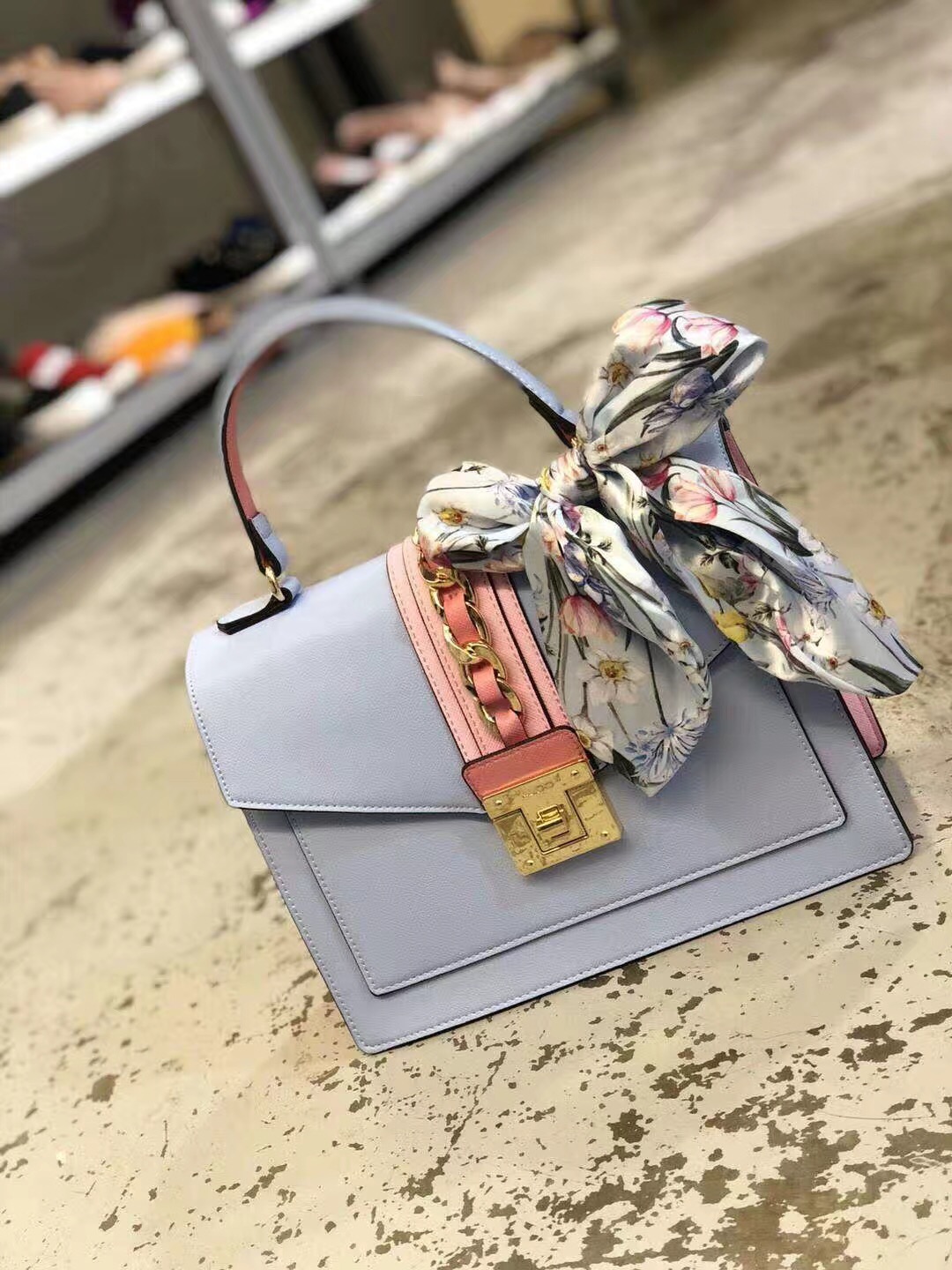
Designer bags are very
popular
Chinese consumers who purchase foreign products in China must pay high and clandestine taxes.  These taxes dramatically increase the prices of popular consumer products in China.  In many cases, the government levies these high taxes on foreign brands made in China.  Milk powder, luxury bags, vitamin supplements, and electronics are popular items sold by daigou’s.  In November of 2017, the Chinese government cut the average import tax from 17.3% to 7.7%.  However, the incredibly opaque method of how, when, and at what rate the government levies import taxes makes this claim suspect.   
Chinese consumers circumvent the high taxes by buying products through daigou's.  They buy products while abroad and ship the products back to China for sale at a markup.  Despite the costs and time involved in this practice, it is still cheaper for Chinese consumers to buy products through daigou's than from retail outlets in China.  The fact that many of the products purchased abroad and sold by daigou's in China have "made in China" stamped on the back of them makes this practice incredibly surreal.  For example, something is:

1.  Made at a factory in China
2.  Shipped to a port    
3.  Loaded on a ship and shipped across the Pacific Ocean
4.  Unloaded at a port in America
5.  Loaded onto a truck and shipped across the country
6.  Unloaded and put on display in a store
7.  Purchased by a daigou (after they receive an order from a consumer back in China)
8.  Purchased, packaged, and shipped by the daigou
9.  Sent to a sorting facility
10.  Shipped to a port 
11.  Loaded onto a ship 
12.  Sent across the Pacific Ocean
13.  Unloaded at a port in China
14.  Shipped by truck to a sorting facility
15.  Delivered by a delivery service to the Chinese consumer in China

And the item still costs less than if the Chinese consumer bought it off the shelf at their local store!

Items like this a 
listed on
WeChat accounts
Daigou's use the Chinese social media platform WeChat to list products available for purchase in stores.  Daigou’s take pictures of the items and upload them as a “WeChat Moment,” which is similar to a Facebook “Status Update.”  Go to a Costco or Wal-Mart in any major city, and you will likely find Chinese people taking pictures of products with their phone.  They work as daigou’s.  People in the daigou's social circle can view the products and place orders by forwarding a message to the diagou using the app.  Often, purchasers pay for the items through Alipay or some other form of virtual wallet (think Apple Pay but Alibaba branded).  

Some daigou's have the ability to carry the items they've sold through customs.  You'll see hundreds of daigou's at the Shenzhen and Hong Kong border.  Follow the link to see a YouTube video about the border.  Whenever I arrive at Beijing Capital Airport, I rarely see anyone go through the line to declare items at customs.  Even individual travelers with five or six suitcases go through the "nothing to declare" line without a problem.  It's painfully obvious that these people are daigou's returning to China with items purchased abroad.  
This watch likely
comes with at least
a 50% markup in
China

So why don't customs officials stop them and make them pay taxes on the suitcases full of items they've purchased for resale?  There's a lot of speculation about why the Chinese government turns a blind eye to daigou's.  I think it's because it allows overseas Chinese to generate wealth without having them interact with us "natives."  Feel free to speculate in the comments below....

https://www.youtube.com/watch?v=YQm5FZMforg

http://www.scmp.com/news/china/policies-politics/article/2121377/china-cuts-import-tariffs-range-consumer-goods

http://www.nzherald.co.nz/business/news/article.cfm?c_id=3&objectid=11979837


Tuesday, August 16, 2016

Paulson on China

None of us could ever love Henry Paulson as much as he loves himself.  I came to this conclusion early while reading his book Dealing with China.  That being said it's a really good read, and I recommend it for anyone interested in either Chinese or US politics.  For me, the most interesting thing about the book was Paulson dancing around the subsequent histories of some of the people he dealt with in China.  Gao Yan, Bo Xilai, and Zhou Yongkank all feature in the book.

Where in the world is Gao Yan?
Gao Yan - One of the PRC's most famous and wanted fugitives.  He fled the country with millions of dollars earmarked for power projects in 2002.  His location is still a mystery.  Paulson met with him shortly after the terrorist attacks of 9/11 and says that he was not apologetic and showed no sympathy for America's loss.  He took time in his book to highlight his personal dislike of Gao.

I found this very short section of the book fascinating.  Gao Yan worked for the State Grid Corporation of China, the mysterious and very politically powerful state power company.  Little is known about the inner working of this State Owned Enterprise (SOE).  Many of the nation's most important princelings spend part of their careers there, including the daughter of Li Peng who was implicated in the Panama Papers earlier this year.
Just like an episode of House of Cards

Bo Xilai - Paulson mentions Bo's larger than life persona.  The book also contains an aside about Bo's downfall and the earthshaking scandal that shook the Communist Party of China to its core.  The scandal surrounding his downfall contains many larger-than-life details, including his wife murdering a British businessman by poisoning him.  Supposedly the British businessman, Neil Heywood, served as the Bo family's "white glove", helping the family move illicit money out of China.  Some also speculate that he had a relationship with Bo's wife, dubbed the Chinese lady Macbeth.

Zhou Yongkang was famously
denied hair dye in prison
Zhou Yongkang - Zhou remains the largest "tiger" snared in President Xi Jinping's anti-corruption crackdown.  He was arrested a little less than a year before the book's release and convicted a few month's after its release.  Paulson doesn't have much to say about Zhou's character.  Interesting considering that the two probably had a ton of interaction and a relationship going back over two decades.  Paulson even arranged a meeting between Zhou and then-President George H. W. Bush.  It's likely that Paulson doesn't touch on Zhou's character or their personal friendship because Paulson knew he wouldn't be doing the disgraced CPC politician any favors.  Paulson also probably didn't want to link himself too tightly to someone who is rumored to have arranged the murder of his first wife and who has become the scapegoat for China's forced organ harvesting of prisoners of consciousness.

What Paulson doesn't say about these three rouges tells us just as much as what he does say.  His book is good and no one would dispute the fact that "Hank" is one of the smartest and greatest businessman of his generation.  Just be prepared to be constantly reminded of his environmentalism and altruism.  Basically, the only problem this book had is the same problem most autobiographies suffer from which can be summed up in one phrase: "I was right"


Tuesday, June 28, 2016

Jack Ma - Face of a Changing Nation

The face that launched a 1000
delivery packages
While browsing at the New Orleans Public Library I stumbled across a copy of Alibaba: The House that Jack Ma Built.  The book is a great, easy read and sheds light on one of China's most important cultural exports, the eccentric business mogul.
 
In recent years, Chinese businessman Jack Ma has become ubiquitous.  You can see him everywhere.  From television to the internet and everything in between, Jack Ma is there.  In many ways he has become the face of Chinese business around the world.  Mostly for the better.  Say what you will about Ma, he is a fascinating individual.  His position at the forefront of China's economic expansion has done a great deal to bolster opinions of Chinese business abroad.  Ma projects what few other successful mainland businessmen do; a sense of transparency.  The man loves to joke and laugh, and his fluency in English goes a long way in projecting an image that translates well outside of China.  Just compare him to Chen Guangbiao (that guy who said he'd buy the New York Times).  Chen's downright buffoonish behavior has made him a laughingstock outside of his home country, despite his amazing professional success.  In many ways Ma serves as the antithesis of Chen, portraying a pragmatic and humble image that makes him something akin to China's Warren Buffet.

I recommend this book, but you
don't have to take my word for it.
Jack continues to battle it out with Wang Jianlin for the title of Asia's Richest Person.  In some ways, the two men couldn't be more different.  Ma has made a name for himself creating business practices that take advantage of circumstances in China, such as learning to work around the country's fractured supply chains.  Ma once called Alibaba a crocodile in the Yangzte River and compared his foreign competitors to sharks in the ocean.  Wang's relationship with foreign business is much more confrontational.  His recent, notorious spat with Disney shows this in spades.  His company recently acquired Legendary Entertainment.  The studio behind such blockbusters as The Dark Knight and World of Warcraft, demonstrating his "if you can't beat 'em, buy 'em" style of business.

His personal image and his reluctance to intentionally cultivate a cult of personality has distinguish Ma from his Chinese contemporaries and made him more accessible to a foreign audiences.  Ma's story is exceptional and inspiring.  I recommend this book for anyone trying to pierce the veil of Chinese corporate culture.