Showing posts with label Review. Show all posts

Monday, June 19, 2017

The Xi Jinping Era: Cheng Li's New Reference Book for Chinese Politics

Pay no attention to the man behind the curtain!
Anyone interested in China has probably gotten their hands on this book.  A good deal of fanfare accompanied its release, and several of my favorite podcasts featured recommendations of the book.  So, does it live up to the hype?  Yes.  However, unless you're a serious China watcher, I wouldn't pick this one up.

This book is dense.  Like really dense.  It took me a long time to get through it.  In hindsight, I should have read all of the book's conclusion sections first, and then just read the chapters that interested me.  Much of the book's content consists of information about the composition of committees and governing bodies in the PRC.  Other than the noteworthy individuals, most of the names went in one ear and out the other.  However, the extensive profiling of politicians will make it possible to refer back to this book.  I expect to use this book when the next party congress happens.  This is the best reference book for Chinese politics.  The names of politicians, committees, and departments are indexed, making it easy to find information.  
The book's author

Cheng Li insists his approach to studying Chinese is quantitative because he uses numbers and charts.  Like many "social scientists," he cloaks his work in the cloth of science, even though nothing about it is scientific.  Adding charts and a large about of statistics, while useful, does not make something scientific.  

In the decades to come, prior generations will likely view this book as a great snapshot of foreign understanding of the inner workings of Chinese politics.  Xi Jinping's consolidation of power has revolutionized Chinese politics, and I must give great credit to Cheng Li for trying to make sense of post-collective leadership in China.  I must give him even greater credit for not shying away from the fact that Xi's revolution poses great dangers to the established orders both inside and outside China.   

Friday, March 10, 2017

Chungking Express: A Unique Cinematic Masterpiece

One of the film's posters
The seminal film Chungking Express paints a wonderful, cinematic portrait of isolation in densely populated Hong Kong.  The urban jungle metaphor has an added layer because Chungking is the Cantonese word for Chongqing (a city in west central China) that also means jungle.  To be up front, I have been searching for a copy of this film for years.  I finally secured a copy from the New Orleans Public Library.  The film is split into two halves, each chronicling the recent break-up of a Hong Kong police officer’s relationship.  Don’t get confused, the two officers in the film aren’t the same person.  Luckily they don’t look alike, and their stories have almost no overlap.  Certainly an unusual structure, but for this film it works.   

The facade of the actual
Chungking Mansions
The film takes its name from the legendary Hong Kong slum Chungking Mansions, smack-dab in the middle of Kowloon’s Golden Mile.  The images of the building’s tightly packed corridors and improvised factories inside of cramped, converted apartments juxtaposes amazingly with the loneliness felt by the main characters.  It’s amazing how well the film conveys this feeling, and I can’t really express all the ways that it does it.  The director uses a lot of longshots, quickly turning the camera to capture the characters’ movements as they dart around small rooms filled with boxes, beds, and tables.  You just have to see it for yourself.  It gave me a claustrophobic feeling.    

The film’s amazing music distinguishes it from other “artsy” films of the 90’s.  The soundtrack features both instrumental and pop tunes to great effect.  One warning; get ready to hear the song California Dreaming more than you ever thought possible.  But the payoff from the song and story just make its repetitive use even better.  For the first time in years, I am considering buying a film’s soundtrack.  I was blown away by the music. 

Two of the film's protagonists
While my wife was not a big fan of the film, she enjoyed seeing the film’s stars at the beginning of their careers.  Many of the actors and actresses went on to have very successful careers in the Hong Kong, Taiwan, and Chinese film industries.  One of the actresses even does a song on the soundtrack, lending credence to the stereotype of Hong Kong cinema producing multitalented stars.  
  
I find it extremely difficult to articulate why I loved this film so much.  With film being such a visual media, it’s impossible to describe the tone and visual style of the film.  And that’s why the film is so amazing.  I can’t really describe in words why it’s so special.  The makers of this film produced something that only the magic of cinema can achieve. 
      
Stock Google image of 
Chungking Mansions' ground 
floor
Unlike other film’s set in the world’s most dynamic city-state, Chungking Express is a view of the city looking down on the lives of its people, instead of from street level looking up. 

Note: I previously wrote a blog about the actual Chungking Mansions from which this film takes its name.  Here’s a link

http://chofficespace.blogspot.com/2014/03/the-mansions.html


Wednesday, March 8, 2017

The Three Body Problem: Beleive the Hype

The Book's Cover Features the Pyramid
from the Novel's VR Game.
It seems like people can’t stop talking about The Three Body Problem.  Winner of the 2016 Hugo Award, this book details the well-trod topic of humanity’s first contact with aliens.  The book courted controversy from many outspoken science fiction authors and critics.  Many felt that the book simply won awards because of organizations shoehorning in diversity instead of its merit.  While I can’t speak to the other nominees for these awards, I can say that The Three Body Problem deserves great praise for its originality and scientific concepts.  Yes, the “diversity is super good and necessary” thing has probably gone too far, but this book deserves the recognition. 

The book’s author is Chinese and all of the main characters are too.  Thankfully this saves us the trouble of reading/watching aliens destroy New York City for 4,000,000th time.  The story opens during the restless days of the Cultural Revolution.  According to the translator, who was featured on the Sinica podcast, the book’s publisher altered the progression of the story so that the flashbacks appeared toward the middle of the book. They though publishing a book on the 50th anniversary of the Cultural Revolution and featuring the period as a backdrop might result in undue scrutiny.  Frankly, it’s amazing these parts made it into the book at all.  I’d bet that if the book was published today, just a few short years later, some of these flashbacks would have been cut. 

I enjoyed reading a book that approaches such a common plot from a new perspective.   In some ways it’s a retread of Childhood’s End and other similar stories, but the book is never held back by this.  The book’s true originality comes from the computer game featured in the story and the alien world.  The parts of the book set in these two settings stand head-and-shoulders above anything I have read recently.  The sections set in the “real world” are less interesting.  The characters are two dimensional and even China itself seems flat.  I understand not including things that might date the novel, but there is almost nothing that fleshes out the setting.  Other than a passing reference to the CCTV Building and Tiananmen Square, this novel could take place anywhere.  The main character, Wang Miao, passively observes the story.  We learn very little about him.
       
If the Chinese characters in the story are two dimensional, then the foreign characters are simply lines.  The stereotypical dialogue makes them laughable.  A British military officer who appears at a meeting utters only one line, “To be or not to be.”  This line caused me to laugh while I read the book.  It’s interesting that the author of the novel writes dialogue for extraterrestrials more realistically than foreigners. 


Despite some literal shortcomings, no reader should miss this book.  The ideas and interpretations in the novel never fail to amaze.  I think the ideas in this book will keep readers talking about it for decades to come, just like the works of Phillip K. Dick and Arthur C. Clarke.  It’s less about character development and prose and more about thinking of humanity in a new light.  And in the end, it’s the ideas that make a story worthwhile.  

P.S. - the second book in the series isn't good.  Don't waste your time on it.  Just read the Wikipedia page and move on to book three.

Friday, February 3, 2017

Ghost Fleet: The Book Everyone is Talking About!

The Cover
Ghost Fleet, by P.W. Singer and August Cole, is a novel about a future war between the United States and China.  In the vacuum left by the death of Tom Clancy, authors have rushed in to fill the void with cutting edge military thrillers.  Ghost Fleet succeeds by using something that Clancy’s works had in spades...realism.  It excels when it focuses on the world in which the book takes place rather than the characters in the book.  The book is set at an indeterminate date in the near future.  The Communist Party has been swept away and replaced with an extremely meritocratic regime consisting of business and military elite.  This political transition occurred after the Chinese people became fed up with the corruption and ineffectiveness of the communist party.    

Published in 2015, the book references contemporary events in China, such as a holographic Xi Jinping expounding his Chinese Dream.  Besides referencing a two-child policy implemented by the new regime, nothing seriously dates the book as of this point.  Several interesting ideas make their way into the novel.  For example, an American insurgency on the Chinese occupied Hawaiian Islands and the use of a space laser to shoot down enemy satellites.  The most chilling aspect of the book is the Chinese military’s use of hacking.  The Chinese easily disable an American military overly dependent on technology.  The apathetic United States failed to prepare for a war that the Chinese were clearly fighting before the first shots were even fired.  It just goes to show that you can complain out intellectual property theft all you want, but at the end of the day, what we’re really doing is arming and transferring technology to enemies of the United States. 

Iraq-Style Insurgency in Paradise

I love the book’s fearlessness in confronting how future technology will change what it means to be human.  We’ve reached a point where technology can and will be implanted into the human body.  Increasingly people will need to constantly stay “connected” to be competitive for jobs, education, etc.  I’ve noticed that many recent science fiction movies and books side-step this issue.  In most films and books, technology is still something that you can just turn off.  In truth we never even turn off our cellphones anymore, because we feel that we can’t be out of contact.  What will life be like when they just implant the functions of the phone into your brain?  I find it incredibly unsettling that people will begin getting technology implanted into their bodies, and I think many other people do as well.  I tell myself that I’ll never do it, no matter how common it becomes.  The true of the matter is that when others begin doing it and reaping the benefits, such as faster access to information and interconnectivity, the rest of us will likely have to adapt or die.  In Ghost Fleet, many of the characters have technological implants.  What I found so realistic about the implants in the novel was that there are multiple types of implants serving different functions.

The book is ripe for a film adaptation, but I don’t expect one anytime soon.  With Chinese influence in America’s entertainment industry growing, it’s unlikely any major studio would touch a property that depicts a post-party China launching a preemptive attack on the United States.  Releasing that film would make the studio the target of cyber attacks and quickly get the studio locked out of the lucrative Chinese market. 

Oh well, the book is always better than the movie anyway.           

Friday, December 16, 2016

Golgo 13: Master Assassin

Golgo 13 is Japan's second longest running manga series.  It follows an assassin for hire named Duke Togo who often goes by the code name Golgo 13.  Often compared to James Bond, Golgo 13 travels the world carrying out "contracts" as a hitman.  Unlike James Bond, Duke Togo is not a charmer.  Stoic nearly to the point of absurdity, Golgo 13 is much more like the Bond of Fleming's novels than the one-liner-spouting, Tuxedo wearing Hollywood Bond.  He never shows emotion and only cares about his work.  Golgo 13 has a dedication to his job that mirrors Japanese salaryman culture.  It's the duty and dedication to his craft that makes Golgo 13 so interesting.  

I just finished the last volume of Viz Publishing's English translations.  Viz, who publishes many great English translations of Japanese manga series, has translated 13 volumes of Golgo 13.  The various plot lines cover everything from postwar Japan to the Bush/Gore presidential race.  The first story I read involved the docking of the US Apollo and Soviet Soyuz space capsules.  Though the translated volumes aren't published in chronological order, its safe to say that Golgo 13's stories have always been firmly rooted in current events.

What keeps the series so fresh is that often the stories don't focus on Golgo 13.  Sometimes he's more of a supporting character.  The series certainly use this to its advantage.  The writers do a great job of grounding each story's narrative in story's setting.  It's wonderful to see how each new story will incorporate elements of the setting's culture or history.  The artwork usually features great images of the cityscapes include memorable renderings of Chicago, New Orleans, and of course Tokyo.

If you're interested in a great manga experience ,make sure to checkout Golgo 13.  It's thrilling, has amazing art, and certainly isn't for kids.


Saturday, September 17, 2016

Mardi Gras: Made in China

Mardi Gras: Made in China is a documentary about the manufacturing of the celebration's ubiquitous, plastic beads.  The crew journeys to China's Fuzhou city in Fujian Provience and documents the manufacturing of the beads in a massive, walled factory.  The crew then travels to New Orleans during Mardi Gras, recording the beads at the end of their life cycle.  
Movie Cover

At the factory, the crew interviews many of the labors who work 12 hours a day making the necklaces, doubloons, and even plastic penises that get thrown to the crowds every year.  Unsurprisingly the conditions at the factory aren't good.  But what really makes life so terrible is the restrictions the factory puts on its employees personal lives.  Employees can be fined an entire day's wages for talking during working hours.  Also, employees can only leave the prison-like factory on Sundays.  The other six days of the week they must spend all their non-working time in the compound.

On the other hand, the owner of the factory lives large on $2 million a year, producing items for the Krewe of Tucks.  He was born in Mainland China but went to Hong Kong as a child.  He returned to China to open the factory after the initiation of economic reforms.  This isn't surprising considering the communist party opened China to Chinese from Taiwan and Hong Kong as a way to bind them closer to the mainland and use the experience and expertise of other "Chinese" to rebuild the country following communism.  Think FoxConn but on a much smaller level.
The Factory Owner

Back in New Orleans, the beads are tossed off the sides of floats.  Some make it to the spectators while others simply fall on the ground, staying exactly where they land.  At the end of the partying, most are just thrown away.  During and after Mardi Gras signs advertising bead recycling centers are posted in public places.  Apparently the beads have a high content of lead which seeps into the groundwater.  The documentary shows the bulldozers that roll down St. Charles Ave. cleaning up the beads after each parade.

I am no sandle wearing hippie, but it's an enormous amount of waste.  The documentary really doesn't do it justice.  Each night bulldozers and workmen travel down the Avenue scooping up the beads.  It's troubling to see how many of the beads don't even make it to the spectators, simply falling onto the ground.  They become trash the instant they get thrown over the sides of the floats.  I am not an innocent party in this either.  Last year I rode on float.  By the end of the parade I had tossed bags of beads without the slightest thought about where they came from or where they would end up.
Beads Everywhere!

Don't get me wrong, I love Mardi Gras, but the waste resulting from the cheap trinkets really troubles me.  That's why I snatched this documentary off the library shelves the second I laid eyes on it.  I hope that one of the Mardi Gras krewes "goes green" in the future and realizes the economic and environmental problems this worthless crap causes.  But with krewes that have mottos like "throw until it hurts," its likely that this tradition won't die easily.  


Saturday, September 10, 2016

James Rolfe Revolutionized Entertainment

Does Anyone Else Remember the Power Glove?
Early this summer at the height of the Ghostbusters (2016) fiasco, a memory of the terrible Ghostbusters NES game that I had as a kid popped into my head.  The game was unplayable.  It ended up in my video game collection for the same reason it probably ended up in millions of other kid's collections...It had the word Ghostbusters printed on the front.  The first thing that came up after googling the video game was a video by the "Angry Video Game Nerd."  The video was a hilarious.  I felt like it had vindicated me and every other kid who got ripped off by crap merchandise.  In the video the Nerd plays the game and does a review while he is.....well....angry.  His character is basically that 30 year old guy that we all know who still lives in his mom and dad's basement.  He makes fun of all the crap video games that ripped us off as children.

The Angry Video Game Nerd, or AVGN as he is known, had hundreds of videos on Youtube.  He was one of the website's first real celebrities.  For the next week, I did nothing except watch James Rolfe's AVGN videos.  When I finished I started watching all of the other videos that his website, Cinemassacre, made over the last 10 years.  He did it all on a shoestring budget.  I kept watching these shows because they were great and incredibly entertaining.  It got to the point where I preferred watching Rolfe's videos to actual Hollywood produced shows.  Before this I had never gotten into the whole Youtube thing.  After watching the AVGN there was no going back.
James Rolfe and his partner in crime Mike
Matei during their amazing Batman episode.

You can find a Youtuber making their own videos about almost every subject.  I started subscribing to a few whose videos I liked.  I found a guy calling himself SerpentZA who does videos about his life in China.  Youtube completed changed the content that I consumed.  Gone were flashy Hollywood shows with laugh tracks, and in were low budget, do-it-yourself videos about subjects that I actually cared about.  I find Rolfe and others like him inspiring.  Rolfe genuinely loves what he does and comes through in all of his videos.  Just try not to laugh when he takes you back to the past to remember something as stupid as the Virtual Boy or all those crappy Tiger handheld games you got for your birthday.

Times have changed and we're no longer stuck with what the networks give us.  Now people have the ability to create and publish their own material.  It's Rolfe and people like him that are the future of entertainment.  So get out there and start your own Youtube channel or a blog.  Yes, I know that I was late to the game on this subject, but no time like the present.


https://www.youtube.com/watch?v=TLVGmvmNitg  

Saturday, September 3, 2016

Project A: Martial Arts Movie Saturday III

Considering his currently close ties
to the Communist Party, Jackie
Chan probably regrets wearing this
Royal Navy uniform
Outside of Asia, Project A isn't well known.  Funny considering it was a favorite movie of Japanese Emperor Hirohito.  This Jackie Chan masterpiece chronicles the misadventures of the Hong Kong Police Force and Royal Navy in the early period of colonial rule.  It's notable for starring three of the "7 little fortunes" of Hong Kong cinema; Jackie Chan, Sammo Hung, and Yuen Biao.  Some of my older readers might remember Sammo Hung as the star of TV's Marshal Law.  As a kid I remember ads for this show but haven't seen any the episodes.  Sammo Hung is also notable for being an overweight marshal arts expert.  That's right....overweight marshal arts expert.  His character is affectionately called "Fats" in the film.  You can see some of his moves in the film, and they are genuinely impressive.  These three actors would later go on to star together in other classic films, such as Twinkle, Twinkle Lucky Stars and Wheels on Meals.  

The hallmark of any Chan film is the stunts, and get ready because Project A has some awesome ones.  In one seen Chan has to hang on to the hands of a clock, a la Charlie Chaplin, before falling three stories to the ground.  The final scene of the film features more grenade explosions than you can shake a German potato masher at.  It's like something out of a low budget Michael Bay film, except that here it's meant to be a little funny and outlandish.

The three main characters
The time period  and setting of the film are refreshing.  There's no "tournament fighting" motif or "shaolin masters" in this film, making it something of an anomaly for kung fu films with English dubbing.  Overall it's great to see an action film with an original premise, particularly one so funny and entertaining.  In terms of tone, the film is way ahead of its time.  It's more like some of Chan's later American movies than other early 80's films.  It fits comfortably in the action/comedy genre alongside Rush Hour and Shanghai Noon.  It certainly contrasts with American action films of the 80's, where if it moves, the lead actor just shoots it to death.    

If you're in the mood for something original and retro, checkout this little known classic.


Eat your heart out Doc Brown and Marty McFly

Saturday, August 20, 2016

Rumble in the Bronx: Martial Arts Movie Saturday 2

Even the tagline highlights
the fact that Jackie Chan
does his own stunts
Rumble in the Bronx has Jackie Chan rumbling in the Bronx.  That's really all you need to know about the plot.  If you need a little more detail, Jackie Chan comes to the Bronx for his uncle's wedding and suddenly keeps running into trouble.  Jackie Chan manages to witness more robberies during his first two days in America than I have witnessed in my whole life.  Jackie's uncle then goes on his honeymoon and leaves his nephew in charge of sewing up the loose ends as he transfers ownership of his store to one of Jackie's two love interests in the film.

The action in the movie is amazing.  Even twenty years later, I don't feel like it has an equal.  One of my favorite things about watching this film was knowing that Jackie Chan did all his own stunts.  It's flat-out amazing.  Jackie Chan jumps off buildings, kicks people in the face, water skis behind a hovercraft, and so much more.  I could go on for a few more pages, but you really have to see the action in this film to believe it.  Despite all this awesome kung fu action, Jackie Chan is still incredibly down-to-earth.  He's a kung fu champion version of an everyman.  Amazing considering he spends a good portion of the movie disarming the bad guys and throwing them through windows.
Team Glasses/Mullet

Team reformed criminal
The two love interests were one of my favorite parts of the movie.  I found myself thinking, who will Jackie choose.  Will he choose the smart, entrepreneurial Chinese woman or the wild, criminal, racially ambiguous Chinese woman?  I seriously wanted to know....well guess what.  You'll never really find out.  This movie just sort of ends......too early.  I honestly think they just ran out of money.  

Anytime you see pinball machines in a kung fu
film....assume someone will be thrown into them
The last 15 minutes of this film's plot makes absolutely no sense.  But by that point in the film doesn't matter.  You've already bought into the film so much that you don't care what happens.  It's sort of like blowing up the shark in the end of Jaws.  It's completely stupid, but the movie is so good that you really, really don't care.

Make sure to checkout this classic from the 90's and enjoy memories of a time when New York was dangerous but affordable.

P.S. Chan is the man


Tuesday, August 16, 2016

Paulson on China

None of us could ever love Henry Paulson as much as he loves himself.  I came to this conclusion early while reading his book Dealing with China.  That being said it's a really good read, and I recommend it for anyone interested in either Chinese or US politics.  For me, the most interesting thing about the book was Paulson dancing around the subsequent histories of some of the people he dealt with in China.  Gao Yan, Bo Xilai, and Zhou Yongkank all feature in the book.

Where in the world is Gao Yan?
Gao Yan - One of the PRC's most famous and wanted fugitives.  He fled the country with millions of dollars earmarked for power projects in 2002.  His location is still a mystery.  Paulson met with him shortly after the terrorist attacks of 9/11 and says that he was not apologetic and showed no sympathy for America's loss.  He took time in his book to highlight his personal dislike of Gao.

I found this very short section of the book fascinating.  Gao Yan worked for the State Grid Corporation of China, the mysterious and very politically powerful state power company.  Little is known about the inner working of this State Owned Enterprise (SOE).  Many of the nation's most important princelings spend part of their careers there, including the daughter of Li Peng who was implicated in the Panama Papers earlier this year.
Just like an episode of House of Cards

Bo Xilai - Paulson mentions Bo's larger than life persona.  The book also contains an aside about Bo's downfall and the earthshaking scandal that shook the Communist Party of China to its core.  The scandal surrounding his downfall contains many larger-than-life details, including his wife murdering a British businessman by poisoning him.  Supposedly the British businessman, Neil Heywood, served as the Bo family's "white glove", helping the family move illicit money out of China.  Some also speculate that he had a relationship with Bo's wife, dubbed the Chinese lady Macbeth.

Zhou Yongkang was famously
denied hair dye in prison
Zhou Yongkang - Zhou remains the largest "tiger" snared in President Xi Jinping's anti-corruption crackdown.  He was arrested a little less than a year before the book's release and convicted a few month's after its release.  Paulson doesn't have much to say about Zhou's character.  Interesting considering that the two probably had a ton of interaction and a relationship going back over two decades.  Paulson even arranged a meeting between Zhou and then-President George H. W. Bush.  It's likely that Paulson doesn't touch on Zhou's character or their personal friendship because Paulson knew he wouldn't be doing the disgraced CPC politician any favors.  Paulson also probably didn't want to link himself too tightly to someone who is rumored to have arranged the murder of his first wife and who has become the scapegoat for China's forced organ harvesting of prisoners of consciousness.

What Paulson doesn't say about these three rouges tells us just as much as what he does say.  His book is good and no one would dispute the fact that "Hank" is one of the smartest and greatest businessman of his generation.  Just be prepared to be constantly reminded of his environmentalism and altruism.  Basically, the only problem this book had is the same problem most autobiographies suffer from which can be summed up in one phrase: "I was right"


Saturday, August 13, 2016

Martial Arts Movie Saturday 1: Enter the Dragon

The Film Poster
Enter the Dragon is the definitive Bruce Lee film.  The last film he completed before his death, Enter the Dragon cemented his place as a Hong Kong film legend and a global iconic.  Since its release in the 70's, the film has become a must-see for generations of action film fans.  For many it represents Hong Kong action films at their best.  It's tragic that Lee died before the release of the film, because they managed to put lightning in a bottle with this one.

Very much a product of its time, the film is also worth noting because of the global events occurring during its production and release.  As the Mainland was deep in the grips of the Cultural Revolution and the British economy tanked after decades of nationalizations and socialism, Hong Kong continued to boom.  Caught in the middle of two global powers with uncertain futures, Hong Kong culture began to blossom and the films made by its production companies showcase this.  This attracted foreign audiences to action films and launched a genre of films still popular today all over the globe.  The result is a true blend of east and west.    
The man, the myth, the legend

The plot of the Enter the Dragon resembles a mashup of early James Bond films and Mortal Kombat.  A bad guy has an island, and Bruce Lee must go to his island and compete in the his diabolical kung fu tournament.  The result is awesome kung fu action.  I don't think I need to say much more about it than that.  The action is awesome, the stunts amazing, and Bruce Lee makes us all wish that we'd taken karate classes as children.

A few characters of note are the extremely British government official who approaches Lee with the mission.  His OxBridge accent and dress make the character border on the edge of parody.  Bruce Lee is joined at the tournament by two Americans, one white and the other black.  Between the British guy and the Americans from two different races, it was likely that the production company was trying to appeal to the widest range of demographics possible.  Not surprising considering that this movie was the first Hong Kong action film financed by a major American studio (Warner Brothers) and the increasing popularity of kung fu films outside Hong Kong and China.    

Bruce Lee and a young Jackie Chan
According to the extras on the DVD, Jackie Chan worked as a stunt double on the film and appears in a few scenes.  I didn't notice him during my initial screening of the film.  Likely because the scale of the production is epic.  Yeah...in case you didn't know it, Jackie Chan is way older than he looks.

If you only see one 43 year old, dubbed, kung fu film this year, make it this one.

Keep a lookout for future Martial Arts Movie Saturday reviews. 

Tuesday, June 28, 2016

Jack Ma - Face of a Changing Nation

The face that launched a 1000
delivery packages
While browsing at the New Orleans Public Library I stumbled across a copy of Alibaba: The House that Jack Ma Built.  The book is a great, easy read and sheds light on one of China's most important cultural exports, the eccentric business mogul.
 
In recent years, Chinese businessman Jack Ma has become ubiquitous.  You can see him everywhere.  From television to the internet and everything in between, Jack Ma is there.  In many ways he has become the face of Chinese business around the world.  Mostly for the better.  Say what you will about Ma, he is a fascinating individual.  His position at the forefront of China's economic expansion has done a great deal to bolster opinions of Chinese business abroad.  Ma projects what few other successful mainland businessmen do; a sense of transparency.  The man loves to joke and laugh, and his fluency in English goes a long way in projecting an image that translates well outside of China.  Just compare him to Chen Guangbiao (that guy who said he'd buy the New York Times).  Chen's downright buffoonish behavior has made him a laughingstock outside of his home country, despite his amazing professional success.  In many ways Ma serves as the antithesis of Chen, portraying a pragmatic and humble image that makes him something akin to China's Warren Buffet.

I recommend this book, but you
don't have to take my word for it.
Jack continues to battle it out with Wang Jianlin for the title of Asia's Richest Person.  In some ways, the two men couldn't be more different.  Ma has made a name for himself creating business practices that take advantage of circumstances in China, such as learning to work around the country's fractured supply chains.  Ma once called Alibaba a crocodile in the Yangzte River and compared his foreign competitors to sharks in the ocean.  Wang's relationship with foreign business is much more confrontational.  His recent, notorious spat with Disney shows this in spades.  His company recently acquired Legendary Entertainment.  The studio behind such blockbusters as The Dark Knight and World of Warcraft, demonstrating his "if you can't beat 'em, buy 'em" style of business.

His personal image and his reluctance to intentionally cultivate a cult of personality has distinguish Ma from his Chinese contemporaries and made him more accessible to a foreign audiences.  Ma's story is exceptional and inspiring.  I recommend this book for anyone trying to pierce the veil of Chinese corporate culture.    

Monday, September 7, 2015

Noble House

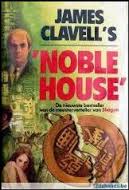
Cover from an old
edition
For the last month and a half, I have trudged through the task of reading James Clavell's Noble House.  The book is fantastic and that's quite possibly the understatement of the century.  I say "trudged" only because the book's length makes it a daunting task for any reader.  After a month and a half of reading, I am only on page 1010 out of 1400.  That makes it over 200 pages longer than Clavell's more famous behemoth, Shogun.  Even for an avid reader like myself, reading a book longer than many series can be a labor of love.

The book is a direct sequel to Clavell's Taipan, one of my favorite books from last year.  Set over the course of only one week in 1963, the book chronicles the intrigue surrounding Hong Kong's Noble House and its current enigmatic leader, Ian Dunross.  The excitement hasn't let up since the prologue where an illegal shipment of jet engines, bound for Red China, sinks in a storm at the very same moment Dunross is sworn in as the new Taipan (leader) of the Noble House.

From the TV miniseries, starring
Pierce Brosnon
Though no one will ever accuse me of sharing Clavell's belief in a benign China, buried by its Soviet neighbor, he writes about Chinese characters in a way no other waiguo author does, explaining cultural differences accurately and with an unflinching and unapologetic eye.  Today most would probably call his representations of Chinese characters as something less than PC.  However, I find them to be spot on, and I think he does a wonderful job of falling into the trap of a homogenous Asian continent.  Also the fact he is not Chinese eliminates the point most readers pounce on when reading Chinese books.  Many readers try to attribute baffling cultural differences or inconsistencies to translation errors, a point no one can make against Clavell.

I think the wonderful job Clavell does making the motivations and characteristics of Asian societies different from their "western" counterparts has certainly played an important role with how I have enjoyed his work.  I was unable to finish Shogun because I found it monotonous and boring, though comfortable and quaint.  The Japanese lust for power for the sake of status made the Japanese characters seem difficult to analyze.  They were just too different and difficult for me to relate to them.  However, I have loved both of Clavell's books that are set in Hong Kong for the very opposite reason.  My familiarity with Chinese culture has made the book interesting, funny, and tragic in ways that would have went over my head only a few years ago.

Despite my apprehensions about Shogun (that no one else seems to share), Clavell has proven himself to be a wonderful window onto Asia for the wider world.

Thursday, May 14, 2015

The Rogue State's Gallery

It's a little known fact that the North Korean government runs an art gallery in Beijing's swanky 798 arts district.  It's become something of an urban legend, and the gallery is tucked away in a corner of the compound making it hard for the casual visitor to find.

A four mop salute
Outside the gallery stands a replica of a large statue from North Korea.  You can see it pictured here with a salute of mops standing against it.  My guess is that the Dear Leader might be a neat freak.  As I mentioned before, this place isn't easy to find.  I found it completely by chance while wondering around the 798.  I didn't even know it existed before I went.

The expiation on the side of the building about what it is

Though the gallery doesn't allow pictures, I managed to snap a few before the workers told me in English to stop.  I also observed that the gallery employees spoke to each other entirely in Chinese.

One of the pictures from inside the gallery features a whole wall of paintings including people on horseback and a female factory worker.  Another picture shows a painting of the North Korean Soccer team celebrating.  The art is eerily similar to the art you will find in the "modern" section of the National Museum of China, but unlike the NMoC, this North Korean gallery featured some art with contemporary subjects (after 1980).  This fact only highlighted for me the interesting corner the Chinese government has drawn itself into in recent decades.

A sampling of North Korean art
Turning its back on Marxist-Maoist ideology while still trying to justify the party's existence has made the topic of contemporary life taboo.  You see this in everything from television and movies to books.  It seems like the majority of television shows on CCTV are either about fighting the Nationalist or Japanese, dramas about the imperial court, or food.  It's for this reason that foreign entertainment has become so big in China, and why its popularity continues to grow at breakneck speed.  North Korea doesn't have shy away from the modern world.  Like China it controls the media, but it doesn't have to worry as much about information slipping in from the outside world.

The fact I saw a painting glorifying a soccer victory in Socialist-Realist style didn't come as a shock to me.  What shocked me was that I haven't seen it in China, because almost nothing in China after 1949 is ever discussed in art.  As discussed in my last post, almost none of the art in the 798 comes off as anything close to unique.  In a way the North Korean gallery highlighted what government-approved art looks like before the grip of the state loosens like it has in today's China.

The gallery sold souvenirs like North Korean postage stamps.  I didn't buy any because I made a conscience decision not to indirectly support the regime in the DPRK.  As my time in Beijing comes to a close I am beginning to wonder if I have somehow passively lent support to the CPC by living here.  The truth is that I probably have in a way, and frankly I feel guilty for this in a way.

Things like this only help me appreciate that I am an American.        


Did North Korea win World Cup '14 and no one tell me about it?
Note: A new movie about an elderly woman dealing with her experiences during the Cultural Revolution was released last week.  I am holding my breath hoping it doesn't get pulled before I can see it.  

Friday, January 24, 2014

Reading Your Way through Winter


I know that it has been a while since I last wrote, but no one reads this thing anyway.  Over the last few months, I did some traveling, moved apartments, and applied for graduate schools.  I also became addicted to reading over the last few months.  Pathetically, I plan my social and lunch schedules around reading, but everybody has got to have a hobby.  I finished the fifth Dune book last night.  It is quite good, especially considering the travesty that was God Emperor of Dune.  Read that one a few years ago.  It was so boring that it took me years to get the resolve to read this one.  Frank Herbert is really philosophical in this one as the Bene Gesserit attempt to continue humanity’s journey down the “Golden Path”.  I am still not entirely certain what this “Golden Path” is, but the jist of it is keeping humanity from destroying itself in a feudalistic future.  In this one, the citizens that scattered throughout the universe during the first four novels’ Imperial Age return to t 
he core systems.  Think of it like post-colonialism in space…with giant sandworms.  I know, I know….heavy stuff right?

 All this reading has resulted in some great literary finds and some disappointments.  After finishing Lonesome Dove, currently my favorite book ever, a few months ago, my grandfather warned me never to read the sequel, Streets of Laredo.  Long story short, I should have listened.  The first two thirds of the book are really amazing.  Who doesn’t want to read about Woodrow Call chasing outlaws across west Texas with an out-of-place railroad accountant from New York?  Sounds like a recipe for success, right?  However, the story shifts its emphasis to the relationship between Joey Garza, the outlaw who the railroad hirers Call to kill, and his mother.  I imagine the author gets a lot of hate mail for the book, but I say cut him some slack.  Yeah, the ending of the book is about as disappointing as your ice cream falling off the cone, but he did write Lonesome Dove.    

Jan Morris’s portrait of Hong Kong made for a great read.  It’s amazing how she/he (that’s right, the author had a sex change) managed to make the history of this former Crown Colony into a narrative driven pseudo-story.  Gotta give her props.  I like it so well that I loaned my copy to someone getting ready to visit the city.  There is a lot of interesting stuff in this one, and Morris does a reasonably good job analyzing China’s relationship with the world outside the Middle Kingdom.  Although this stanch Welsh republican’s presentation of contemporary China is a little too idealized for me.  She overlooks the effects of the Cultural Revolution Other than its effects on mainland immigration to Hong Kong.  Overall, the book proves another amazing work by the woman who gave us the Pax Britannica trilogy.  


Monday, October 14, 2013

Great Reads in the Red Capital


While in China, I have been catching up on my reading.  Like many of you, I neglected reading for pleasure in college due to a lack of free time and sobriety.  Now that I have learned firsthand just how boring the working world is, I have filled my free time with some great books from the Bookworm here in Beijing.  I just finished Lonesome Dove, and I can safely say that it is the best book I have ever read.  If you haven’t read this one, do yourself a favor and go pick up a copy from your local library.  Hell, I’ll give you mine if you promise to read it.  My feelings toward Lonesome Dove came as a relief because two of the “classic” novels I read preceding Lonesome Dove disappointed me.  I finished Midnight’s Children in the beginning of July and The Master and Margarita in August.  Both are widely regarded as classics, but I just couldn’t get into the whole magical-realism vibe and I fear that many of the Indian political references in Midnight’s Children went over my head.  I noticed a copy of tMaM on a friend’s family bookshelf while I was staying with them in LA.  His mother couldn’t stop applauding the book, which leads me to believe I missed something while reading.  Or maybe I just didn’t like it.  I started the Hitchhiker’s Guide to the Galaxy yesterday just because it is so different from Lonesome Dove.  I bought the book years ago at a used bookstore and have always intended to read it.  As I continue my exile here in Beijing, I know I’ll burn through quite a few books this winter while keeping warm (literally and figuratively), and I definitely plan on reading some books by Chinese authors.  Let me know if you have any suggestions.    

Thursday, May 30, 2013

Frank Turner - Tape Deck Heart Review

Frank Turner is at his best when he plays uptempo and fun songs.  Get ready for plenty of those on his new album.  Turner duplicates the energy of "England Keep My Bones" while creating a record and sound that feel fresh and new.  What's really cool about the album is the way it explores the theme of "letting go."  This comes as little surprise from the man whose last record focused on death and mortality.  Turner should be admired for the energy and feeling that he packs into each of these songs.  At a time when many music fans argue that the albums are dead, Turner presents proves otherwise.  Make sure to pick up a copy of this album.  

Stand Out Tracks - Recovery; The Fisher King Blues; Oh Brother    

Tuesday, March 26, 2013

The Strokes - Comedown Machine Review

The sound of most bands changes with time.  Without this fact, the Beatles wouldn't have made Sgt. Pepper's.  Some reach new heights, the Arctic Monkey on "Suck It and See," and some stagnate and reach new lows (see any Red Hot Chili Peppers release since the late 1990's).  However, you can't fault a band for trying something new and moving in a different direction.  That is exactly what the Strokes started with "Angles" and they continue it with "Comedown Machine."  For those of you that still live in the "Is This It?" bubble, you will find a lot to like here.  "All the Time" and "80's Comedown Machine" should please anyone still stuck in the last decade.  Also, the entire second half of the album flows with great style and ease, and it possesses a high replay-ability.  This just became my new favorite chill album and if you love the band, you'll most likely enjoy this album too.  The experimental song "One Way Trigger" serves as the weak point of the entire album (reviewed in last post).  Still, I highly recommend this album.  It does not contain any amazing songs nor will it win back any fans alienated by "Angles," but as an album it works.  The Strokes made something that easily plays alongside the rest of their discography, just in a very different way from their other releases.

Review: 8/10

Stand Out Tracks - "Call It Fate, Call It Karma," "All the Time," "80's Comedown Machine"


Wednesday, March 13, 2013

Palma Violets 180 Review


While traveling in England, I had the chance to snag a copy of this bands debut and see them at the 100 club.  Let's start with the album review.  Yes, it doesn't come out for a few weeks in the US, and no I am not sure if this is legal.  However, I bought the album off the shelves, so I think it is okay.  For a debut, this work is impressive.  These guys made a record that rivals far more established acts in terms of fun, listenability, and repeat playability.  "180" quickly replaced last year's "Lonerism" as my standby album.  The energy and recklessness of the band ooze from every track.  Also, it is refreshing to hear a vocalist with a lower range for once.  Two great tracks bookend this album with the energy of "Best of Friends" and the exhausted angst of "14."  My main hope is that this band can deliver a followup equally as good.  Listen to this album and you will not be disappointed.

Review: 9/10

Stand out tracks- Last of the Summer Wine, Best of Friends, 14

Live Review

Anytime I visit London, I make a pilgramage to the 100 Club.  This time, I was lucky enough to catch Palma Violets shortly after NME crowned them as the United Kingdom's best new band.  That Monday night, they lived up to the title.  After two great opening acts, they took the stage and electrified the crowd.  Everything from the vocals to the drums personified rock.  It is no wonder that some compare the ramshackle energy of the band to the Libertines.  By the end of their set, chaos had broken loose as the crowd stormed the stage.  With live performances like this, Palma Violets deliver on all accounts.  A new "must see" band has truly hit the music world and is taking it by storm.  Make sure to catch them when they make it to America.  

Thursday, February 28, 2013

Japandroids- Celebration Rock

Yes, I know this album came out over seven months ago.  Yes, I just bought it last week.  However, this album deserves some much delayed praise from this blogger.  Let's just start by saying that this is a really great album.  From start to finish, the tracks push relentlessly from one to the next driving the album forward a fevered pace.  As a result, it becomes impossible to stop listening.  The album sports amazing lyrics, catchy guitar hooks, and great drum work, and all of these things combine for one great collection of songs.  For the uninitiated, this duo from Vancouver sounds like the punk counterpart to the more blues-centered sound of the Black Keys.  Some might detract from the album because of the similarity of the songs.  But who cares with songs this great?

Review: 8/10

Stand out tracks-  Fire's Highway, The House that Heaven Built


Photo from japandroids.com