Monday, July 18, 2016

Dining on a Budget: World's Cheapest Michelin Star Restaurant

Outside Facade
On my most recent trip to Hong Kong, I made a stop at the world famous Tim Ho Wan.  The restaurant currently holds the wonderful title as the world's cheapest restaurant with a Michelin Star.  This oxymoron instantly got the restaurant put on my list of "must see" attractions in a city know for its amazing restaurants.  Since I have little to no money to my name, I try to never miss anything with the words "cheapest" in the title.  Believe me the restaurant did not disappoint and delivered on its promise of being both cheap and amazing.

The location of the restaurant I ate at has the unfortunate address of 9 Fuk Wing Street.  That's right.  That is seriously the address.  Even if the food wasn't good, the address alone might have gotten me to go.  The restaurant sits on the northern edge of the Mong Kok neighborhood in Kowloon, just a short walk from Prince Edward Station.  It's fantastically easy to get to, so you have no excuse for not going.    

Menu
The outside of the restaurant is completely unassuming.  In fact, I nearly walked past the place.  Had I not seen the restaurant on an Anthony Bourdain special, I most certainly would have walked right past it without a second thought.  Luckily, I didn't have to wait in line to get a seat, which might be a problem on weekends.  I recommend going at an off-peak time, just in case of a rush.  

The restaurant has many specialties including BBQ pork buns.  These pork buns are amazing and should not be missed under any circumstances. Because of the sweetness of the buns, they could be eaten as a main dish or a dessert.  These buns more than lived up to the hype.  Our waitress didn't speak very much English.  However when I asked about the restaurant's specialties, she didn't point me to the most expensive items on the menu.  This is always a really good sign at any restaurant.  She also suggested a  rice dish pictured below which I really enjoyed.  Be warned though, the rice dish had cilantro.  I avoid cilantro at all costs because I think it tastes terrible and overpowers anything it's in.  However, I didn't mind it that much in the rice.  But it still packs a punch.  

Our Meal
Tim Ho Wan also does dumplings with a mixture of shrimp and pork.  These also come deep fried.  Like everything else on the menu, these are amazing.  Overall, shrimp and pork are the main staples of this place, and the restaurant does them extremely well.  So well in fact that I will definitely stop by the next time I am in Hong Kong.

The bill came out surprisingly cheap, even considering its title as the world's cheapest Michelin Star restaurant.  Three of us ate for around $20 USD.  Not bad in one of the world's most expensive cities.  Plus, the ability to tell your friends you ate at the world's cheapest Michelin Star restaurant is priceless.  


Saturday, July 2, 2016

Pascal Manale's: Local Institution

It's not often that I write a post that has nothing to do with the Middle Kingdom.  However, I felt the need to highlight one of the places that make my new home of New Orleans such a special city.  On the upriver side of Napoleon Avenue sits a true local institution.  Pascal Manale's restaurant is the kind of place with wood paneled walls and a well worn bar.  One of the few establishments that is equally as welcoming to someone wearing gym shorts as someone in a three piece suit.

New Orleans memorabilia decorates the walls.  Several of the posters are from the Super Bowls held at the old Tulane Stadium just a few blocks upriver.  Pictures of famous people who have eaten at the restaurant also adorn the walls.  Let's just say it's an eclectic group of patrons.  Walking around the barroom and seeing on the photos and memorabilia is certainly part of the experience.  

Photo courtesy of the restaurant's website
The bar does an insane happy hour.  Drinks are half price and a dozen oysters will run you around $8.  The oyster bar is one of the main attractions of this place.  Opposite the real bar is the standing only oyster bar where a shucker stands shucking oysters for the customers.  The oyster bar will accommodate about five people, and even that is a squeeze.  Make sure the ask the person working the oyster bar where the oysters came from.  The bar tender will tell you a number that corresponds to a section on a map of south Louisiana.  It's cool to know exactly where the oysters come from, and this adds a cool novelty to the experience.

I would like to recommend something from the menu but I can't.  I've never eaten off the menu.  According to the internet they have great barbecue shrimp.  However, every time I go to this place, the happy hour deal calls my name like a siren, and I end up eating a dozen oysters.  If you're ever in New Orleans and looking to eat at a local institution, avoid the hipsters on Magazine Street checkout Pascal Manale's.            

Tuesday, June 28, 2016

Remembering the Cultural Revolution

Frank Dikotter's (umlaut omitted) new book The Cultural Revolution: A People's History dropped a few months ago.  Usually the Chinese government considers the Cultural Revolution a taboo subject and glosses over it or omits it entirely from history.  This makes books like Dikotter's newest release all the more important, especially considering his place as one of the world's foremost sinologists.

Many of China's top party leaders faced persecution during the Cultural Revolution, including future paramount leader Deng Xiaoping and the father of the CPC's currently leader, Xi Jinping.  Despite this, China occasionally roles out the nostalgia for the period in the form of song and dance numbers during large public events.  I will admit, I often find this nostalgia for a period market by human suffering distasteful.

During the period between 1966 and Mao's death in 1976, Chinese citizens labeled class enemies faced persecution as the CPC attempted to erase the vestiges of China's past.  Priceless artifacts and buildings were destroyed as the communists attempted to eliminate anything relating to the country's past and "foreign influences" (except communism).  Douzheng (loosely translated as "struggle") between Maoist fervor and the "Four Olds" tore the country apart.

In China today, many claim there seems to exist a sort of collective amnesia about the Cultural Revolution.  I for one would classify it more as collective silence.  "Amnesia" implies that everyone has forgotten it.  Speaking with anyone who lived through those turbulent years will make it clear that no one has forgotten them.  People choose not to talk about the horrors and excesses of the period because the pain and suffering of the time remain a part of everyday life.  You still see its effects from the highest level of the government to the peeling paint from Maoist slogans fading on the sides of buildings.  

Though I haven't got a chance to read Dikotter's most recent work, I would definitely recommend his other books The Tragedy of Liberation and Mao's Great Famine.  Only by understanding the country's past, and examining how it is portrayed in the present, can foreigners ever hope to understand this complex country.  

Jack Ma - Face of a Changing Nation

The face that launched a 1000
delivery packages
While browsing at the New Orleans Public Library I stumbled across a copy of Alibaba: The House that Jack Ma Built.  The book is a great, easy read and sheds light on one of China's most important cultural exports, the eccentric business mogul.
 
In recent years, Chinese businessman Jack Ma has become ubiquitous.  You can see him everywhere.  From television to the internet and everything in between, Jack Ma is there.  In many ways he has become the face of Chinese business around the world.  Mostly for the better.  Say what you will about Ma, he is a fascinating individual.  His position at the forefront of China's economic expansion has done a great deal to bolster opinions of Chinese business abroad.  Ma projects what few other successful mainland businessmen do; a sense of transparency.  The man loves to joke and laugh, and his fluency in English goes a long way in projecting an image that translates well outside of China.  Just compare him to Chen Guangbiao (that guy who said he'd buy the New York Times).  Chen's downright buffoonish behavior has made him a laughingstock outside of his home country, despite his amazing professional success.  In many ways Ma serves as the antithesis of Chen, portraying a pragmatic and humble image that makes him something akin to China's Warren Buffet.

I recommend this book, but you
don't have to take my word for it.
Jack continues to battle it out with Wang Jianlin for the title of Asia's Richest Person.  In some ways, the two men couldn't be more different.  Ma has made a name for himself creating business practices that take advantage of circumstances in China, such as learning to work around the country's fractured supply chains.  Ma once called Alibaba a crocodile in the Yangzte River and compared his foreign competitors to sharks in the ocean.  Wang's relationship with foreign business is much more confrontational.  His recent, notorious spat with Disney shows this in spades.  His company recently acquired Legendary Entertainment.  The studio behind such blockbusters as The Dark Knight and World of Warcraft, demonstrating his "if you can't beat 'em, buy 'em" style of business.

His personal image and his reluctance to intentionally cultivate a cult of personality has distinguish Ma from his Chinese contemporaries and made him more accessible to a foreign audiences.  Ma's story is exceptional and inspiring.  I recommend this book for anyone trying to pierce the veil of Chinese corporate culture.    

Sunday, November 8, 2015

想北京

Sometimes I miss Beijing, not often but I do.  I miss the Bookworm, I miss chuaner (串儿), and I miss all the free time.  But most of the time, I am glad I moved to New Orleans, and I am certainly glad I married the greatest person on earth, 唐奇。
My mom never ages!

Classic Uncle Gary!

你好后海

From the street!

Classic Effie!

Keep your eyes closed during important photos.

她非常漂亮

I am a lucky man!

漂亮!

No caption needed!

#can'tdivorcemenow!

Married in Algiers! (not the capital of Algeria!)

Don't ask how much the tiki glasses cost!

#balloonglow

Monday, September 7, 2015

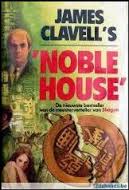
Noble House

Cover from an old
edition
For the last month and a half, I have trudged through the task of reading James Clavell's Noble House.  The book is fantastic and that's quite possibly the understatement of the century.  I say "trudged" only because the book's length makes it a daunting task for any reader.  After a month and a half of reading, I am only on page 1010 out of 1400.  That makes it over 200 pages longer than Clavell's more famous behemoth, Shogun.  Even for an avid reader like myself, reading a book longer than many series can be a labor of love.

The book is a direct sequel to Clavell's Taipan, one of my favorite books from last year.  Set over the course of only one week in 1963, the book chronicles the intrigue surrounding Hong Kong's Noble House and its current enigmatic leader, Ian Dunross.  The excitement hasn't let up since the prologue where an illegal shipment of jet engines, bound for Red China, sinks in a storm at the very same moment Dunross is sworn in as the new Taipan (leader) of the Noble House.

From the TV miniseries, starring
Pierce Brosnon
Though no one will ever accuse me of sharing Clavell's belief in a benign China, buried by its Soviet neighbor, he writes about Chinese characters in a way no other waiguo author does, explaining cultural differences accurately and with an unflinching and unapologetic eye.  Today most would probably call his representations of Chinese characters as something less than PC.  However, I find them to be spot on, and I think he does a wonderful job of falling into the trap of a homogenous Asian continent.  Also the fact he is not Chinese eliminates the point most readers pounce on when reading Chinese books.  Many readers try to attribute baffling cultural differences or inconsistencies to translation errors, a point no one can make against Clavell.

I think the wonderful job Clavell does making the motivations and characteristics of Asian societies different from their "western" counterparts has certainly played an important role with how I have enjoyed his work.  I was unable to finish Shogun because I found it monotonous and boring, though comfortable and quaint.  The Japanese lust for power for the sake of status made the Japanese characters seem difficult to analyze.  They were just too different and difficult for me to relate to them.  However, I have loved both of Clavell's books that are set in Hong Kong for the very opposite reason.  My familiarity with Chinese culture has made the book interesting, funny, and tragic in ways that would have went over my head only a few years ago.

Despite my apprehensions about Shogun (that no one else seems to share), Clavell has proven himself to be a wonderful window onto Asia for the wider world.

Wednesday, July 1, 2015

Unintentional Propaganda and Chinese Films

Take a look and Chinese video streaming sites and you'll notice something about the international films.  Sites like Sohu and Youku feature many big budget Hollywood movies from the past several decades.  Nearly all of movies from foreign countries violate China's mysterious film code in some way, such as containing strong violence, nudity, or cursing.  So why do some films get passed the censors while others are kept out.  These films always convey a message that reinforces party doctrine or portray their respective country of origin in a negative light.  Basically they serve as unintentional propaganda.    

Many of the films, documentaries, and television shows produced in the United States and elsewhere get used in China as propaganda.  Some examine social and economic problems in the United States.  Shows like House of Cards have become very popular with the well-educated in China due to their high production value and their discussion of topics taboo in China.  Of course having a show in China that focused on lying and cheating by government officials would never see the light of day.  The effect of these shows/films is threefold.  They make US officials look corrupt and incompetent.  The films and shows make the United States seem unsafe.  And finally they make the US seem unstable.

The importation of these forms of entertainment due result in some uncomfortable questions for the CPC regarding why China censors its domestic entertainment so rigorously, but doesn't seem to care what's imported into the country.  A big controversy arose a few months ago when a drama set in the Forbidden City needed to have scenes of some cleavage removed.  That's right, they cut cleavage, but a foreign film with countless deaths will usually make it through the censors as long as the message fits the mold or part of the production is in some way linked to China.

People in China clamor over themselves to pack into movie theaters and see American blockbusters.  Most non-animated movies aren't translated, forcing the audiences to read subtitles.  Despite the subtitles, people still come in droves.  Of the 10 highest grossing films in China, 6 are American blockbusters released in the last 8 years.  After living here for two years, I can't blame Chinese audiences for flocking to foreign films, American films in particular.  American blockbuster, with their plethora of explosions, mean that audiences don't need to understand every word of the dialogue to follow the plot.

You have three main choices when choosing a Chinese television show or movie; fighting the Japanese, fighting the Nationalists, or a new retelling of Journey to the West.