Sunday, April 20, 2014

India: Cultural Exchange from a Nation at a Crossroads

My new roommate is originally from Mumbai, and as a result, I am having a great deal of fun learning about India and Indian culture.  It might seem counter-intuitive; go to China….learn about India, but life is funny like that sometimes.  And the timing couldn't be better considering all the interesting things going on in that country.

Elections – The world’s largest democracy is going to the polls.  Mountbatten and the British might have taken a lot with them when they left in 47, but the Westminster system remains.  It has been pretty cool having someone who knows the details about the Indian political system, especially considering the ceaseless coverage by the BBC.  The outcome of this election will have a significant and long-term impact on Indian politics, especially considering the troubles of the Indian National Congress and the rise of the anti-corruption party.  It will also have a significant impact on Sino-Indian relations.  India is due to surpass China as the world’s most populous nation in the near future, and despite their strange and often strained relationship, not one Chinese person that I have talked to seems to know that the two countries fought a war in 1962.  This is especially interesting considering China won the war.

Google "India Cricket" and you'll likely get a photo of Sachin Tendulkar.  I think this is him.....


Cricket – The Indian Premier League began earlier this week, and from what I understand, the real drama takes place of the field.  Most of the owners in this league make Jerry Jones and Mark Cuban look like passive observers, and as a result, the league’s one month (that is right....it only lasts one month) season tends to have the atmosphere of a carnival.  Due to the elections, the first matches were held in Dubai this year.  Though the world’s second most popular sport remains an enigma to most of us in the United States (they literally break for tea during international test matches....hilarious), it continues to boom in the Commonwealth and is growing in popularity as mainland China experiences Hong Kong-ization.  My roommate is a fan of the Mumbai Indians, and despite my jibes about having the world's least inventive mascot, he is very excited about this season.     
IPL Clubs
   
Economic Growth – Beijing is famous for its smog…..but it has a new challenger for the title of smoggiest capital.  New Delhi’s population is emblematic of the country’s rapid industrialization.  While the Chinese are betting on Commonwealth Africa becoming the next “workshop of the world” many others are betting on India.  The economic fortunes of India and China seemed intertwined as rising wages and slowing economic growth are forcing manufacturers to look outside China for the next “gold rush” economy.  Both countries are also going through military build-ups with China’s love affair with its first carrier and India continuing its program of naval “indigenization”. 


I have always found the sub-continent fascinating, especially considering its different approach to plurality from the United States.  For example, different religions are governed by different laws in some cases.  India’s complicated relationship with China has only made it more interesting to me during my time in Beijing.  Then again, what nation on earth doesn't have a complicated relationship with Beijing?  The interesting people you meet in Beijing really help put the world in perspective, and I have learned a great deal about many of the other lao weis’ homes during my time here.  It just shows that a good cultural exchange doesn't always have to be between your home country and the nation you are living.

Friday, April 18, 2014

Lunch

An exciting opportunity came up last week; I got the chance to have lunch with an old high school friend that I hadn't seen in years.  It’s great to catch-up with people and find out how things are going.  Usually events like this happen in a more familiar environment, like when you visit home over Christmas.  But in this case, the Local had to do.  My friend, Sieg, made a joke about how he never thought we'd be meeting up on the other side of the world, and I am glad one of us finally pointed out the absurdity of two Hoosiers in their mid-twenties having lunch at a nondescript restaurant in Sanlitun.  It was tough to believe any time at all had passed considering that he had refused to age and still looked like his 17 year old self.  Not bad for him considering that my balding has started to gather pace.    
  
As we chatted and ate, I must admit I started to feel slightly guilty for not staying in touch over the years.  Getting out of Floyds Knobs is no easy feat.  The gravitational pull of 47119 is something akin to a small-medium sized star.  Sometimes you think that you’re out, but it pulls you right back in (like Michael in the Godfather: Part III).  Information sort of gets lost in the shuffle, so most of our meal was spent learning about the last five years of our lives.  I didn't even know that he’d been engaged.  He asked some questions about what I’d been up to with my life (the short answer is not much).     

 I have very little contact with anyone I knew before college, and this probably says more about me than it does any of them.  However, I am more than okay with this 99.99% of the time (this instance being the exception).  I didn't really like growing up in Cell Block 47119, and I make no apology for my open contempt when the numbers 9, 2, and 3 are placed too close together.  Yet I am a very proud Hoosier and want to move home to Indiana someday.  This perplexes my girlfriend who is originally from Hebei Province about 2.5 hours outside of Beijing.  She doesn't understand how I can love Indiana so much but hold Floyds Knobs in such low standing.  What I have really learned from trying to explain this is that the old adage “You had to be there” is still truer than ever.  My lunch the other day showed me that sometimes the “good” of a “bad” situation can sometimes be lost on you at the time.  It took me years to realize this.


It was good to see Sieg again and knowing another Lao Wei in China will bolster my guan xi.  We spent about two hours laughing at some of the more “unique” sights we'd seen in the Middle Kingdom.  We both had great stories, especially considering our different living situations.  He lives in a small provincial city, and I reside in Beijing.  As a result, I got to learn about life in smaller Chinese cities.  Truthfully, it didn't sound all that different than Floyds Knobs, or any other suburb for that matter, except for the smog of course.  I am still holding out hope of more friends and family visiting me in Beijing, but I am not really holding my breath.  That is one luxury in China not even political connections can get you.            

Tuesday, April 8, 2014

Chicago: Second City to None

We have all heard the jokes about Chicago....“Chicago: Come for the food, stay because you got murdered”.  However, this city has a lot to love, including its undying loyalty to its recently lackluster sports teams.  So in an effort to show you that Chicago is second city to none, I have highlighted some positive categories that the city of Chicago dominates. 

Food:  Find me someone that doesn't like Chicago pizza, and I’ll show you someone that shouldn't be trusted.  Chicago boasts some of the world’s greatest and most American food.  Where would the world be without Chicago pizza and the Chicago hot dog?  Skinnier yes, but far less happy and full.  The city’s rich history of immigration makes it a must for anyone interested in Polish and Mexican food.

Jazz/Blues:  I’ll admit it.  Other than Louis Armstrong, I can’t name a single jazz artist.  And I really only know him because he had a funny nickname.  But that doesn't prevent you from enjoying the rich musical heritage of the city.

Politeness:  Most of my fellow Mid-westerners might laugh at this, but as far as mega-cities go, Chicago has the most polite people.  There is a running joke that even the muggers say please and thank you.  During my trip to Chicago, no one cut me in line or shouted at each other on the streets.  This kind of restraint and manners would be unheard of in Beijing, or New York for that matter.  In fact, I often worried about coming off as unintentionally rude while working in the Windy City.  

Sports Fans:  No city on earth loves sports more than Chicago.  Win or lose, this city loves its teams.  From baseball to football and hockey to soccer and basketball, this city loves its teams.  Of course there is the social litmus test that comes with having two baseball teams.  However, judging by the recent efforts of both teams, they are unlikely to meet in the World Series anytime soon…..if ever. 


Cool Neighborhoods:  Gentrification might be slowly destroying New York and London’s cool, but not in Chicago.  From Logan Square to the South Loop, the city boasts many great and exciting communities for young working professionals.  Ever want to realize your dream of not needing a car without moving outside of the Midwest?  Chicago is still your only option.  Despite the stagnant, and in some cases nonexistent, growth rate of the city, many of the city’s neighborhoods continue to be experiencing a renaissance.  I know what you’re thinking….Trevor were you there when that CTA train derailed at O’Hare?  Yes I was.  However, it’s still safer than driving, and after living in Beijing, I’ll never complain about the “L” being crowded ever again.      

Zhong Guo Revisited

It’s no secret that Beijing doesn't winter very well.  The layout of the city means walking a half an hour to get anywhere, and all the coal needed to support government sponsored heating encases the city in a bubble of toxic smog.  However, Beijing does summer right, so I am lucky to return to a warm, relatively unsmoggy city after my three week trip to America.  I waited all winter to use the deck at my apartment, and I have already logged some serious hours on it playing xiang qi (Chinese chess).  I also get the opportunity to enjoy the city’s countless rooftop cafes and bars.  Although, let’s just say many of them likely wouldn't be “up to the safety codes” in the United States, they are still a great, if unsafe, way to enjoy the warm, dry Beijing summer. 

The tourist started their migratory return to Beijing's many tourist sites, so knowing how to dodge the masses has become a key to navigating the city, especially since my move inside the second ring road.  I am hoping to entertain some visiting tourists of my own, and I am currently pressuring my mother and father to come visit China this summer. 


Not going to lie, it was kind of tough leaving Mei Guo to come back to the uncertainty of Zhong Guo.  I am still unsure about my plans for next year, but I will likely be spending another year in the Chinese capital.  This is good considering that I haven’t gotten to travel very much in Asia.  There are many great places, both inside and outside of China that I want to visit.   

Friday, March 14, 2014

Great Leap Brewery: Beijing's Ellis Island

Trying to explain to my Chinese girlfriend why I refer to the Great Leap Brewery as the “Ellis Island” of Beijing took some time and effort.  First, I had to explain what the hell Ellis Island was, then its impact on American history and immigration, and finally why the Great Leap resembled this famous gateway to America.  Once the analogy made sense, she certainly concurred.  Go to GL on any given night and here languages from all over the world.  Hear English in every accent imaginable and take some time to soak up some internationalism in this famously provincial megacity. 


All of this unfolds while lao wei and Chinese scarf down one of the best burgers that I have ever been lucky enough to eat.  That’s right….I said “ever”.  I know…I know, but trust me.  You can find some great hamburgers in China if you just know where to look.  However, the beer is a little lackluster and overpriced, but you can’t have everything. 

Great Leap is one of the first stops for any foreigner “fresh off the boat” from home.  (That is how expatriates refer to newcomers)  It was one of the first places that I went to after arriving in Beijing, and a trip to the GL usually includes at least one fresh-faced, idealistic foreigner who’s ready to experience all China has to offer; after they have one more American-style burger of course.  Though the food is always comforting, the real wonderful part of the experience remains the fact that the other diners don’t stare at me, because they too are likely culturally exhausted lao wei in the Middle Kingdom, looking for a reminder of their homes across the ocean. 

Since the opening of its Sanlitun branch, the restaurant/brewery has gained a cult following among Chinese and a hub-like atmosphere for foreigners.  It is my Chinese girlfriend’s favorite restaurant, so naturally she had her birthday dinner there.  Even foreigners that don’t hail from the west, such as Korean and Japanese expats, use the brewery as their unofficial base of operations.  Sometimes I joke that they’re going to start shuttle services between PEK (Beijing Capital Airport) and the Great Leap.  I should buy a bus and get a Chinese driver’s license and make a killing.  The phenomenon reinforces the idea that in China, all foreigners belong to a single, relatively homogeneous class unto themselves.  Not inferior or superior in anyway, just different.  There are Chinese and foreigners and not much in between.   

The Chinese wait staff specializes in the dialect of Chinglish spoken by tourists and expats trying to master the linguistic difficulties of Mandarin.  Long story short, they all have the patience of Job.  Imagine a bunch of picky foreigners yelling, “Wo bu yao pickle,” at you all day long.  I’d lose it.  And I must say that it is nice to go to a restaurant and not have to yell, “fuian,” to get a waiter to get off their cellphone and pay attention to me.  So comps to the GL for that. 


One of my favorite jokes to make is that a police raid at the Great Leap would get half the illegal foreigners living in Beijing, and this isn't far from the truth.  In the choppy waters of Beijing, sometimes it’s nice to have an international port of call that helps fresh off the boat lao wei to adjust to their new home.  Most will just have their passports stamped and visas checked, but others at the GL are going through the naturalization process just like Ellis Island’s immigrants of yesteryear.            

Thursday, March 13, 2014

The Mansions


My roommate will undertake that wonderful expatriate pilgrimage known as the “visa run” this weekend.  Chinese visas almost always feature a stipulation that the foreign visitor must leave the country after a certain number of days.  Once the foreigner crosses the border, they are free to reenter China and the countdown starts again.  So basically, if you have a one year visa with a 90 day limit, you must leave China every 90 days and then reenter the country.  You can literally just walk across the border, have your passport stamped, and reenter the country without even waiting, all in one afternoon.  If it sounds stupid, pointless, and confusing….that is because it is.  However, it makes it possible for foreigners to qualify for an excessive amount of vacation days, and I am definitely okay with this. 

The most popular destination for expatriate visa runs is the former British colony of Hong Kong.  I know what you are thinking.  “But Trevor, Hong Kong is part of China now.  Why is it considered a foreign country?  Shouldn’t you have to go to Mongolia or Korea to be considered outside of China?”  Don’t question the logic here folks, because Hong Kong is great.  Hopefully it will remain this way after 2047, when Beijing can “officially” alter Hong Kong’s way of life, but I wouldn’t bet on that horse.  But I digress; look for more on this subject in future posts.  My roommate asked me if I had any recommendations for sightseeing and places to stay.  My answer to both was the same; Chungking Mansions. 
First Floor Bazaar

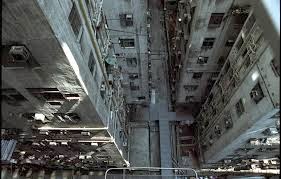
Quite possibly the world’s most famous and lovable ghetto, Chungking Mansions is a 17 story deathtrap on Nathan Road in Kowloon across the bay from Hong Kong Island.  The Economist basically hit the nail on the head when it labeled Chungking Mansions as the real-life equivalent of the Mos Eisley cantina bar from Star Wars.  No trip to Hong Kong would be complete without a visit to the Mansions.  Contained in its walls are people from all over the world, speaking every language imaginable, and living, sleeping, and working within the aging confines of this low rent, high rise slum.  
The Mansions are known for specie (gold and silver) smuggling.  Not to be confused with species smuggling. 
 

I certainly don’t mean to create a negative image of Chungking Mansions by using the world slum to describe it either.  If I was going to live in Hong Kong, the Mansions would be my first choice of accommodation, no matter what kind of budget I had.  Made famous by films, such as Chungking Express and Bloodsport, it embodies the globalized world.  Taking a step inside the carnival-like bazar on the ground floor and not having someone offer to sell you a fake Rolex is simply impossible.  And honestly, who can’t use another fake Rolex?  Many of the travelers staying in the building’s cramped (I am talking closet sized here) youth hostels are thrill seeking, broke tourists like me.  Looking for cheap accommodation and willing to sacrifice fire safety for chance to be in the “middle” of the world’s most exciting city.  The building’s exposed wiring and lack of sunlight go a long way to facilitate the idea the Mansions is a world unto itself, not governed by any external force.
The building's dilapidated facade

This metaphor certainly extends to Hong Kong as a whole.  After reverting to Chinese authority in 1997, the former Crown Colony remains resistant to encroachment from Beijing.  I myself witnessed this year’s joint “Return British Sovereignty” (yeah, it’s a thing.  I was shocked too) and “Autonomy Movement” protest on January 1st.  And with Beijing’s crackdown on freedom of the press in Hong Kong, it is little wonder why the lawless, freewheeling atmosphere of the Mansions has become a symbol for the city over the years.   
One of the building's inner courtyards.   

     
You simply have to love the irony.  In a city synonymous with wealth, extravagance, and the rich/famous, the most exciting and interesting place just happens to be a ghetto.  And why not?  For every person with an interesting story to tell, living in a bungalow on Victoria Peak, Chungking Mansions has ten.  Albeit, in much more unsafe and cramped conditions. 
Not exactly up to "code', but whatever
Spacious Accommodations


It didn’t take long for the Mansions to work its way onto my roommate’s itinerary, and it is perfectly understandable why.  A trip to Hong Kong just isn’t complete without a visit to Chungking. 

Truly a city within a city                         

Monday, March 3, 2014

Trainspotting


Someone put in a request for a post about the Beijing subway system.  In keeping with the tradition of the Beijing subway, I decided to perpetually delay the post until now and then overcrowd it with meaningless opinion.  I don’t hide my contempt for the Beijing metro very well.  You can tell a lot about a city by its mass transit lines.  For example, New York’s system is brilliantly designed and executed, but terribly maintained, and Chicago’s has so much character, but leaves massive sections of west and south Chicago untouched.  Beijing’s shows the world how quickly the Chinese like to build things without really thinking about the future. 

Back in the day as a young, idealistic Hoosier, I loved visiting cities with rapid transit systems.  The idea of reading a book during my commute seemed like a wonderful alternative to spending time alone behind the wheel.  New York, London, Chicago, and Paris represented opportunities for more centralized living that didn’t require four wheels, a driver’s license, and expensive trips to the gas station.  Beijing turned this dream into a nightmare. 

Beijing Subway 2013


Alright, I am over exaggerating a little.  There are a lot of great things about living in this city.  However, the subway certainly doesn’t make the list.  As a result, the rest of this post will come off a little negative.  For one, the system is massive and constantly expanding.  Beijing added several new stations just last month, extending Line 8 into the center of the city.  Line 10 alone features 42 stations and is the world’s largest subway loop.  Line 14, stretching from the city’s southwest corner to Wangjing in the north east, is expected to be completed in the near future. 

All of these lines and stations should make zipping around the city a breeze, unless you want to go in a direction that isn’t east-west or north-south.  As of yet, the Beijing metro doesn’t have any lines crisscrossing the city, leading commuters to make multiple transfers at already crowded stations. 
In terms of ridership, Beijing now ranks as the second most ridden subway system in the world in terms of number of passenger trips, behind Seoul.  A very impressive feat considering the Seoul subway has much large trains with more cars per train.  As a result, the Beijing subway feels infinitely more crowded than its companion in the ROK’s capital.

Beijing Subway 2008


I am no engineer, but whoever designed the thing was definitely looking to cut some corners.  No express lines, malfunctioning ticket machines, and security checks make sure that ever commute is an unhappy one.  That’s right folks; you have to go through an airport security check every time you ride the subway here.  However, the “thoroughness” (I use this term very, very loosely) of the check ironically leaves with an insecure feeling.  I hold the belief that these bag scanning machines only exist to control traffic flow and keep people employed.  Refuse to submit to the security check, and they’ll simply let you walk on through.  (I haven’t done this, but I see people do it all the time).       

The metro does possess a redeeming quality.  Some of the monitors in the stations and trains show cartoons.  Most are safety videos where the characters get into some unsafe situations.  They can be funny, both intentionally and unintentionally.  The poor production values go a long way for comedic effect.  The best part of the subway is the episodes of Shaun the Sheep they sometimes play on Line 5.  As you might guess, Shaun is a sheep who lives on a farm with a group of other animals.  It’s made by the same people who brought us Wallace and Gromit.  Let’s just say I have missed a few trains because I couldn’t stop watching Shaun’s Claymation shenanigans.  I like the sheepdog the best.  His hat is legit.  Whenever my commute becomes too stressful, I take a cue from the farmer in Shaun the Sheep and just pretend that I am oblivious to everything around me.  Another important life lesson learned from children’s cartoons.     


Priceless Comedy Gold